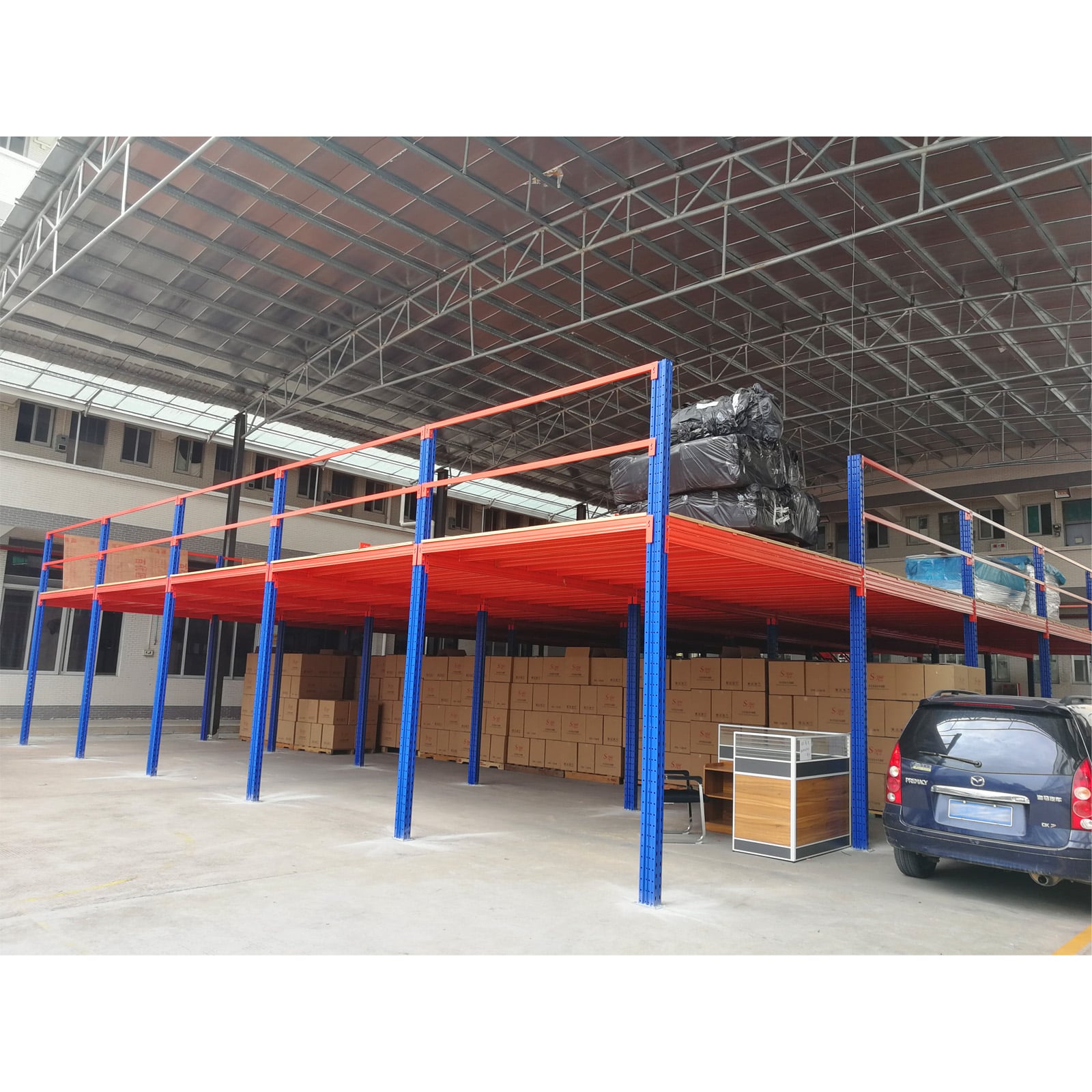
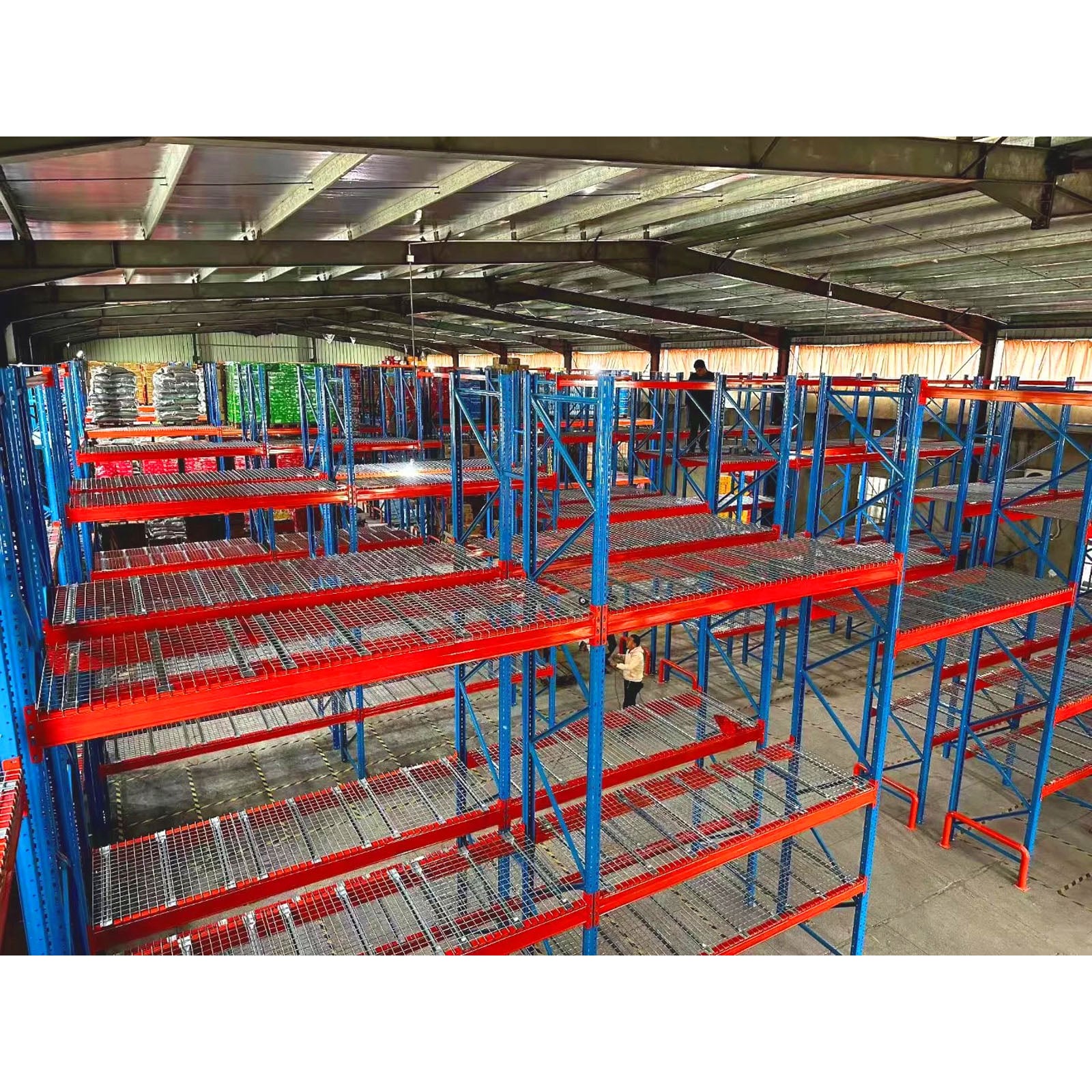
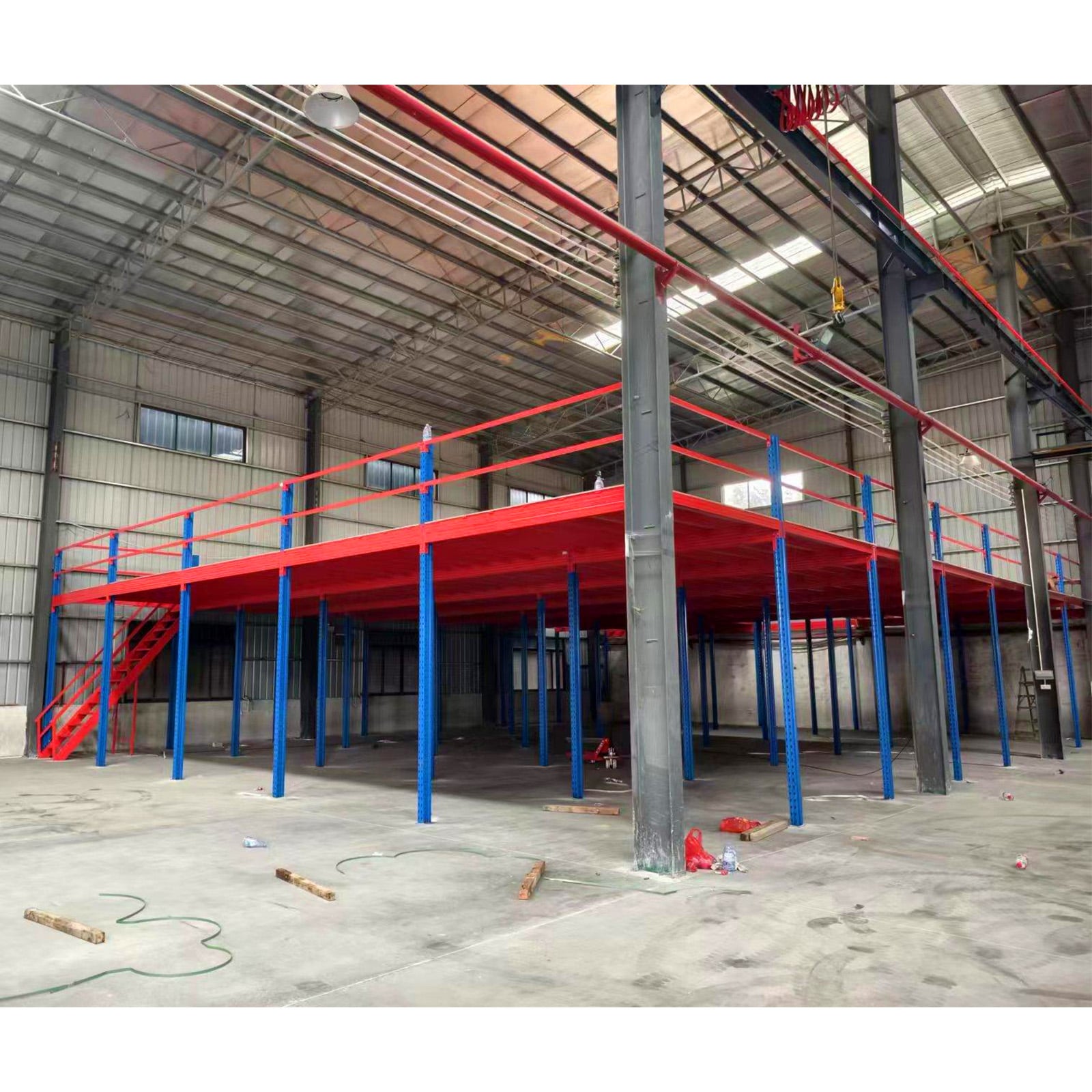
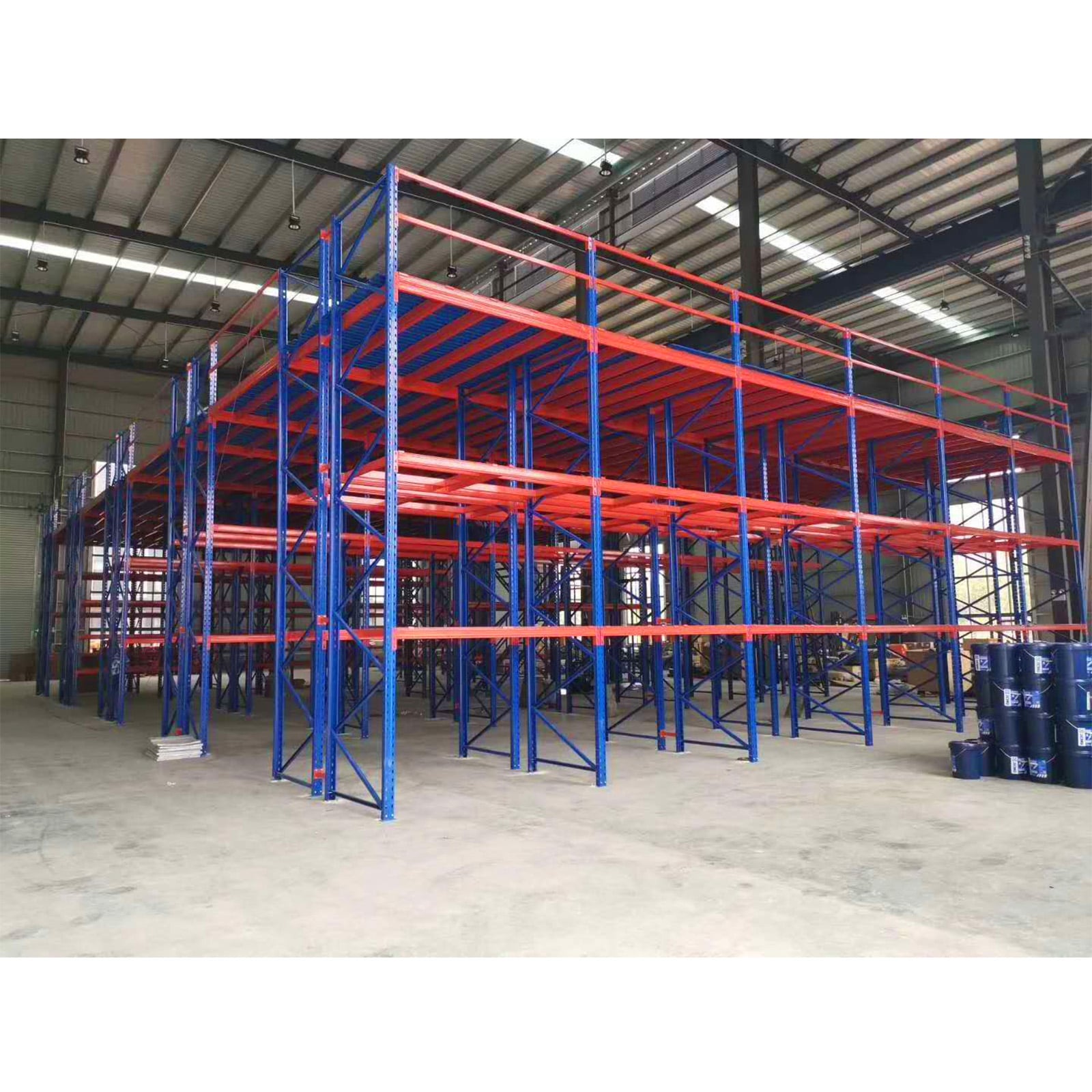
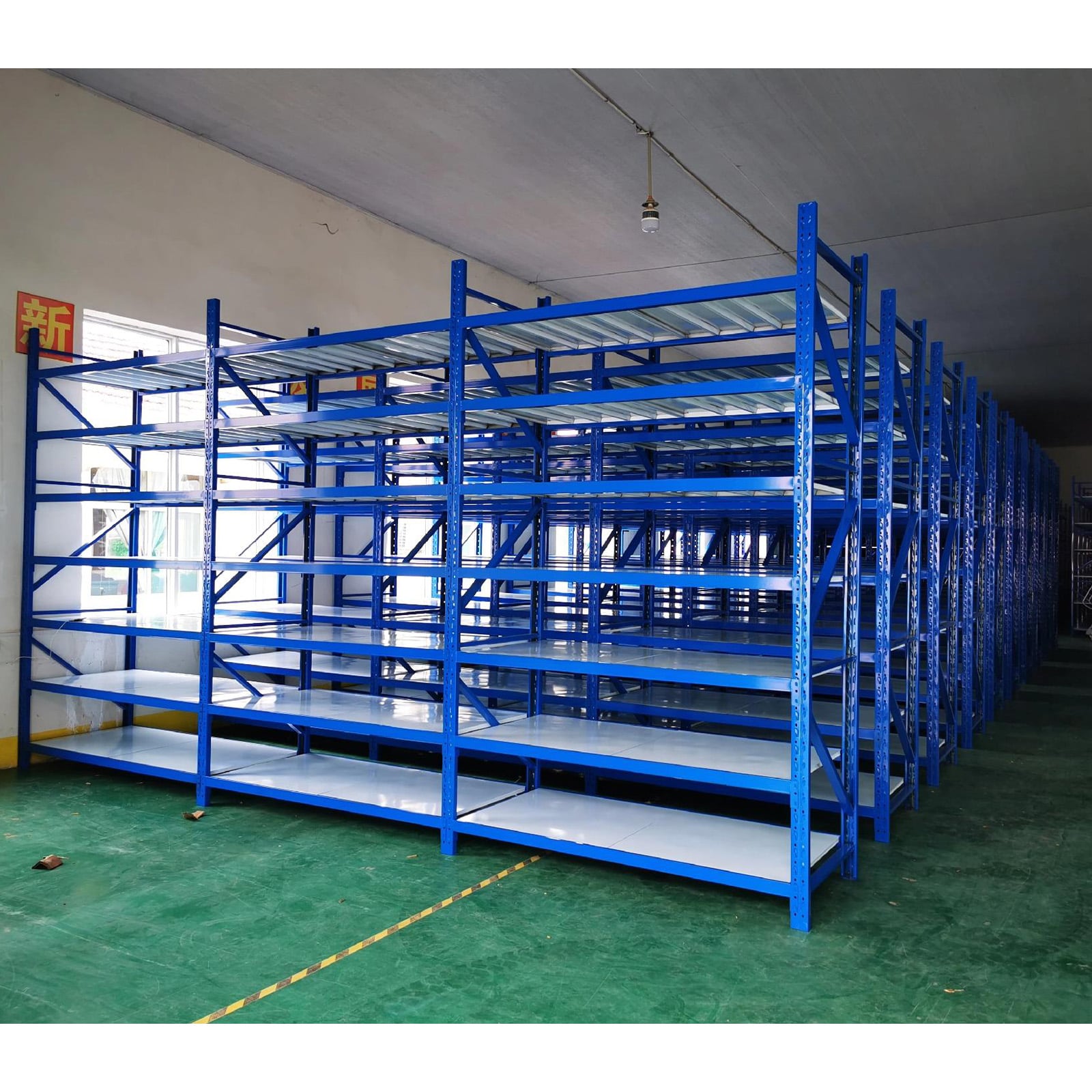
Étages intermédiaires industriels utilisent principalement deux structures : l'acier laminé à froid en forme de rouleau et l'acier structural laminé à chaud. Les systèmes laminés à froid permettent une installation rapide — généralement 30 % plus rapide que les solutions structurales — et offrent un bon rapport coût-efficacité pour des charges d'exploitation légères à modérées allant jusqu'à 125 psf. Leur portée est généralement limitée à 10–15 pieds, ce qui nécessite des colonnes espacées de façon rapprochée et peut entraver l'aménagement du plancher. En revanche, les mezzanines en acier structural supportent des charges d'exploitation supérieures à 250 psf et des portées dépassant 30 pieds, ce qui les rend idéales pour les machines lourdes, les rayonnages à plusieurs niveaux ou l'automatisation en hauteur. Bien que leur installation exige du soudage ou un assemblage boulonné de précision et prenne 2 à 3 semaines, leur capacité de charge, leur flexibilité dimensionnelle et leur adaptabilité à long terme justifient le délai d'exécution plus long dans le cadre d'opérations complexes.
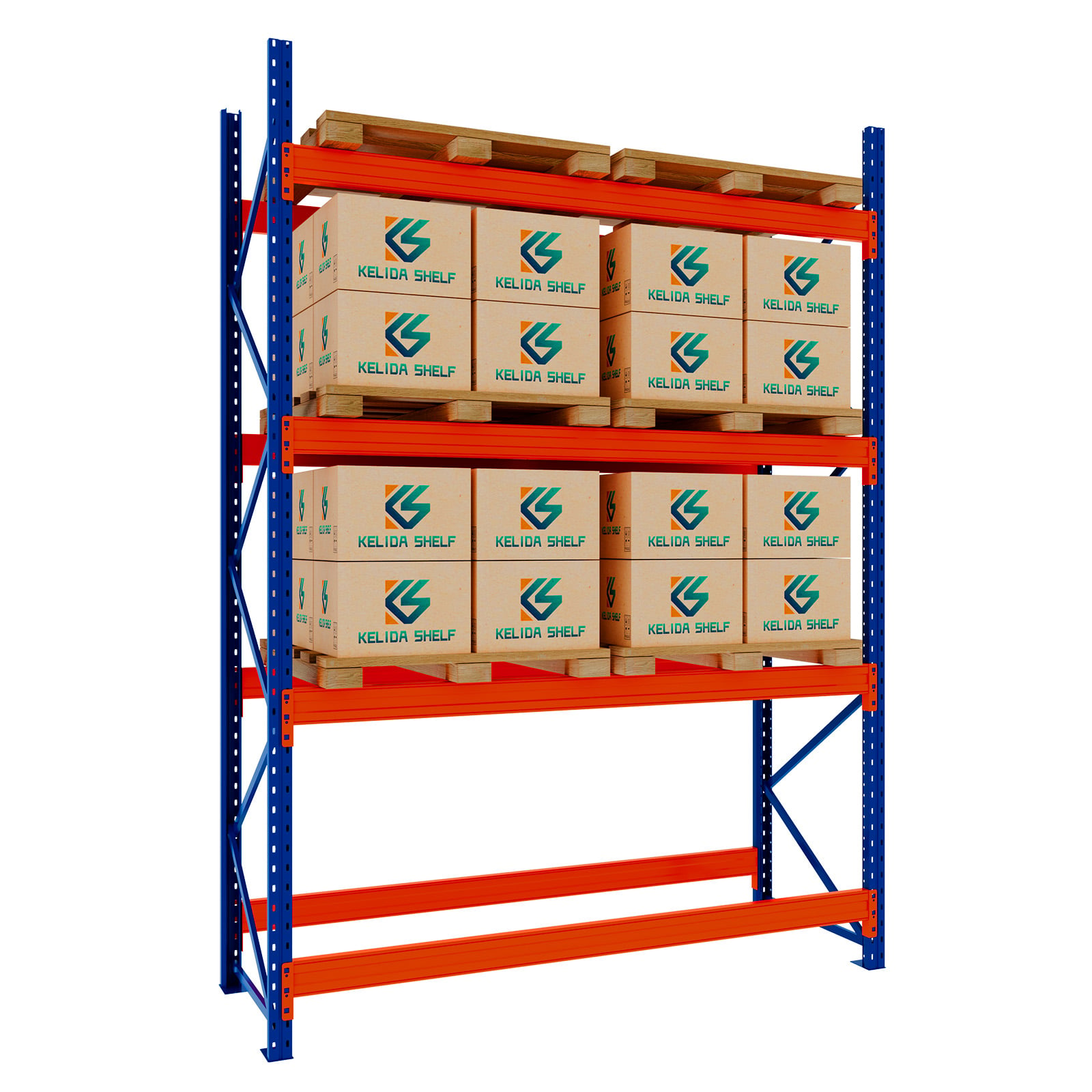
La charge utile dynamique est le facteur déterminant pour une intégration sécurisée et fonctionnelle des rayonnages à palettes. Les mezzanines classées entre 125 et 150 psf conviennent au stockage de cartons, mais risquent une flèche excessive sous des charges standard sur palettes. Les systèmes conçus pour supporter 200 à 250 psf ou plus permettent une compatibilité directe avec les rayonnages industriels — validée par les protocoles d’essai en charge des principaux fabricants de rayonnages. Dépasser la capacité nominale de seulement 10 % peut augmenter la flèche des poutres de 25 %, selon les référentiels OSHA 1910.23, ce qui accroît le risque d’effondrement. Pour les configurations à haute densité, les plateformes de 250 psf supportent des rayonnages doubles profondeur avec des allées étroites, optimisant ainsi l’utilisation du volume vertical — à condition que la flèche reste dans la limite L/240 définie par le IBC afin d’éviter un désalignement des rayonnages lors des opérations de manutention par chariot élévateur ou AGV.
Les normes OSHA 1910.23 et le Code international du bâtiment (IBC), chapitre 5, établissent des paramètres de sécurité obligatoires pour les planchers intermédiaires industriels. Les garde-corps doivent mesurer 42 pouces de hauteur, être équipés d’une barre intermédiaire et résister à une charge ponctuelle de 200 lb ; les escaliers doivent comporter des contremarches uniformes d’au plus 9,5 pouces, des marches profondes de 7 à 10 pouces, et des paliers tous les 12 pieds. De façon critique, l’IBC impose une déflexion maximale de L/240 sous charge d’exploitation afin de préserver l’intégrité structurelle et la compatibilité avec les équipements. Globalement, le respect de ces normes réduit de 67 % les incidents liés aux chutes dans les entrepôts, selon les données du Conseil national de la sécurité (CNS) de 2022.
La sécurité incendie repose sur une sélection coordonnée des matériaux et une intégration systémique. Les dalles en acier non combustible répondent aux exigences ASTM E84 en matière de propagation de la flamme et éliminent les voies d’ignition présentes dans les alternatives en bois ou en composites. Lorsque des sprinklers ESFR (Early Suppression Fast Response) sont utilisés, la norme NFPA 13 exige une hauteur libre non obstruée de 18 à 24 pouces entre la face inférieure de la dalle et les diffuseurs des sprinklers. Les rideaux pare-fumée — installés conformément aux lignes directrices de la NFPA 13 — compartimentent la chaleur et la fumée, en limitant les incendies à des zones de 500 pieds carrés. Cette configuration s’est révélée capable de réduire les pertes moyennes liées aux incendies de 740 000 $ par sinistre, selon le rapport 2023 sur les risques industriels de FM Global.
Les étages intermédiaires industriels représentent un investissement ciblé en capital de 15 à 25 $ par pied carré pour les matériaux et l’installation professionnelle. Contrairement à une extension des installations ou à un déménagement — qui entraînent des retards liés aux autorisations, des approbations d’urbanisme et des dépassements budgétaires lors de la construction — les étages intermédiaires permettent de disposer d’un espace utilisable en quelques semaines. En transformant l’espace aérien vertical sous-utilisé en surface au sol fonctionnelle, ils éliminent les contraintes liées à l’espace horizontal tout en s’intégrant directement aux systèmes existants d’étagères et de manutention des matériaux. Les opérations génèrent régulièrement des gains de productivité de 15 à 30 % grâce à une optimisation des zones de préparation, à une réduction des distances de déplacement et à des flux de travail centralisés. Le temps moyen de prélèvement par le personnel diminue d’environ 20 %, accélérant ainsi les cycles de commande. Pour les installations à espace limité, le retour sur investissement (ROI) complet est généralement atteint en 18 à 36 mois — tiré à parts égales par les économies immobilières et les améliorations mesurables de l’efficacité du travail.
La valeur à long terme découle d'une conception intentionnelle axée sur l'adaptabilité. Les systèmes de mezzanines évolutives permettent une extension progressive — ajout de travées, renforcement des poutres ou mise à niveau des dalles — sans nécessiter le remplacement complet du système. Les configurations en acier structural assemblées par boulonnage conservent leur valeur résiduelle et peuvent être entièrement démontées, relocalisées et réinstallées dans de nouveaux locaux en quelques jours seulement — un avantage décisif lors de fusions, de regroupements de sites ou de changements de bail. Plus important encore, les mezzanines modernes sont conçues pour s'intégrer à l'automatisation : des hauteurs libres verticales constantes permettent le passage des AGV, des dalles renforcées supportent les machines robotisées de stockage et de récupération (SRM), et des conduits intégrés pour l'alimentation électrique et les données rendent possible une logistique « sans lumière ». Dans ce contexte, la mezzanine cesse d'être une infrastructure statique : elle devient la plateforme fondamentale pour une circulation des matières en constante évolution, soutenant à la fois les opérations actuelles et les feuilles de route d'automatisation de nouvelle génération.
Un étage intermédiaire industriel constitue la solution la plus fiable et la plus économique pour doubler votre espace utilisable, accroître votre débit et assurer la pérennité de votre entrepôt — sans nécessiter d’extension ni de déménagement. En adaptant le type de structure, la capacité de charge et les caractéristiques de conformité à l’agencement de vos locaux, à votre feuille de route en matière d’automatisation et à vos objectifs de stockage, vous obtiendrez une extension verticale sûre et hautement performante, avec un retour sur investissement prévisible et rapide.
Pour des solutions d’étages intermédiaires industriels de haute qualité, compatibles avec les équipements d’origine (OEM) et spécialement conçues sur mesure pour les entrepôts internationaux, les sites de fabrication et les installations de prestataires logistiques externes (3PL), associez-vous à un fabricant disposant de plus de 20 ans d’expérience en ingénierie et en réalisation de projets. KELIDA SHELF se spécialise dans les systèmes d’étages intermédiaires robustes et conformes aux normes en vigueur, la production intégrée et un accompagnement clé en main pour plus de 1 000 projets réalisés dans plus de 30 marchés d’exportation. Contactez-nous dès aujourd’hui pour une évaluation gratuite de votre agencement et une solution d’étage intermédiaire entièrement personnalisée.
Les deux principaux types structurels sont l'acier formé à froid par laminage et l'acier structural laminé à chaud.
Les charges d'exploitation varient de 125 à plus de 250 psf, ce qui influence l'intégration des rayonnages à palettes et leurs performances. Des charges plus élevées permettent des configurations de stockage plus robustes.
Les normes OSHA 1910.23 et le chapitre 5 du IBC définissent les exigences relatives aux garde-corps, aux accès par escalier et aux limites de flèche.
Elles optimisent l'espace vertical, offrant un retour sur investissement rapide grâce à une augmentation du débit et de l'efficacité du personnel, sans nécessiter d'agrandissement des installations.
Oui, les systèmes peuvent être étendus, renforcés ou relocalisés, ce qui en fait une solution souple répondant aux besoins opérationnels changeants.
 Actualités chaudes
2025-01-15
2025-01-10
2025-01-05

 EN
EN