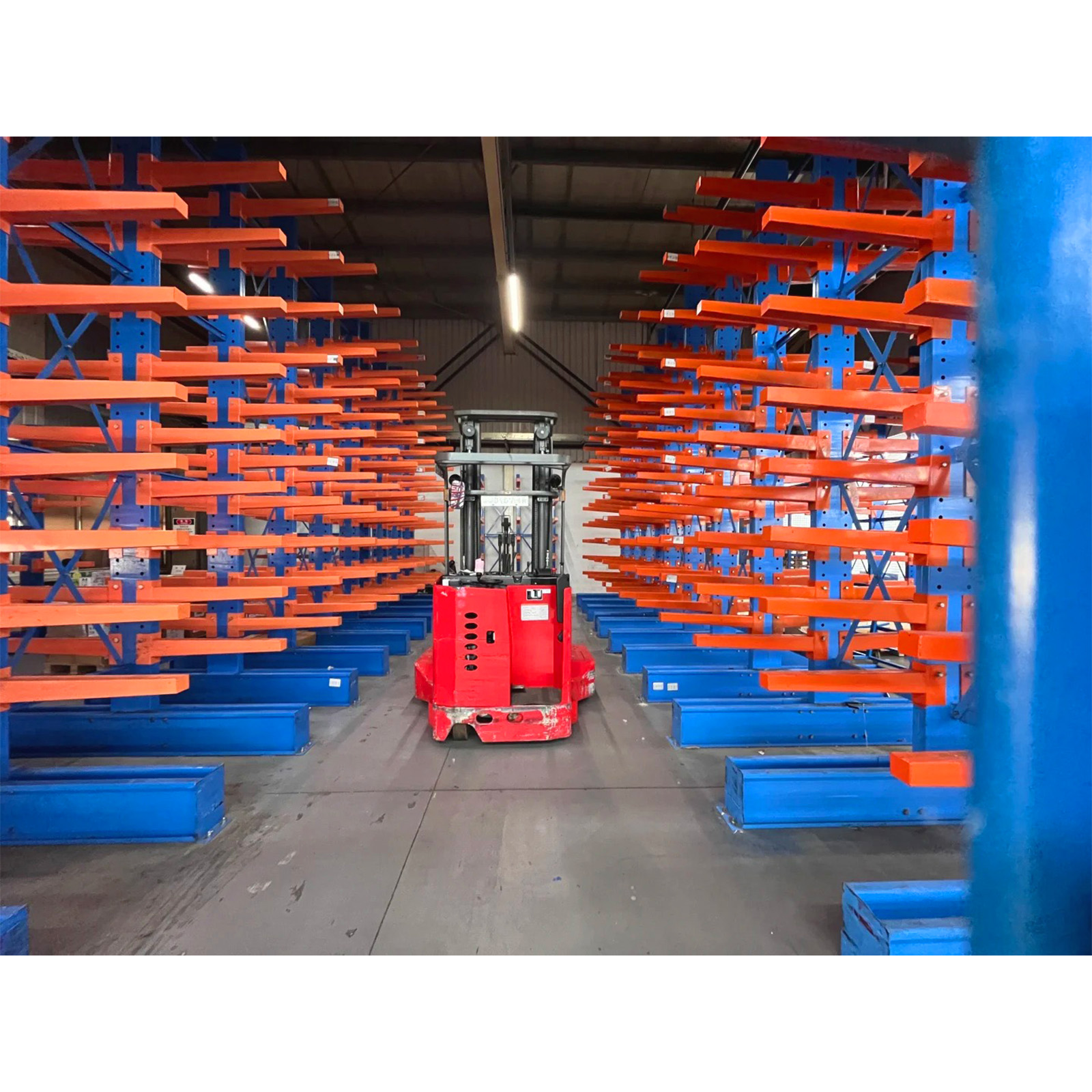
As the core carrier for storing palletized goods in warehouses, the rationality of pallet racking system selection directly determines storage capacity, operational efficiency, and operating costs. Different types of pallet racking (such as beam-type, drive-in, narrow aisle, and shuttle racking) vary significantly in space utilization rate, access efficiency, and load-bearing capacity. Blind selection can easily lead to resource waste or operational disruptions. Therefore, enterprises must focus on the core of "adaptability" and comprehensively consider key factors such as cargo characteristics, warehouse conditions, and operational modes to select the pallet racking system that best meets their needs. Below, we elaborate on the key logic and practical suggestions for selection from five core dimensions.
I. Core Premise: Accurately Matching Cargo Characteristics
Cargo characteristics are the fundamental basis for pallet racking selection. It is necessary to conduct precise assessments from three dimensions—weight, size, and turnover rate—to avoid mismatches such as "using light-duty racks for heavy loads" or "using heavy-duty racks for light loads".
Cargo Weight and Pallet Specifications
The load-bearing rating of the pallet racking must fully match the total weight of the cargo plus the pallet.
Light-duty palletized goods (unit pallet weight ≤ 500kg, e.g., e-commerce small items, light accessories): Light-duty pallet racking is an ideal choice. It features small column spacing and multiple beam layers, suitable for dense storage.
Medium-duty goods (unit pallet weight 500–1500kg, e.g., food and beverages, home appliance accessories): Medium-duty pallet racking is preferred, which adopts thickened beams and columns to balance storage density and access flexibility.
Heavy-duty goods (unit pallet weight ≥ 1500kg, e.g., mechanical parts, large raw materials): Heavy-duty pallet racking is a must. Its columns are made of H-beam steel or thickened cold-rolled steel, and the beams are equipped with safety pins to ensure load-bearing stability.
Meanwhile, pallet dimensions (e.g., 1200×1000mm, 1100×1100mm) determine the length of rack beams, with a 5–10cm margin required to prevent pallets from being placed unsteadily.
Cargo Turnover Rate
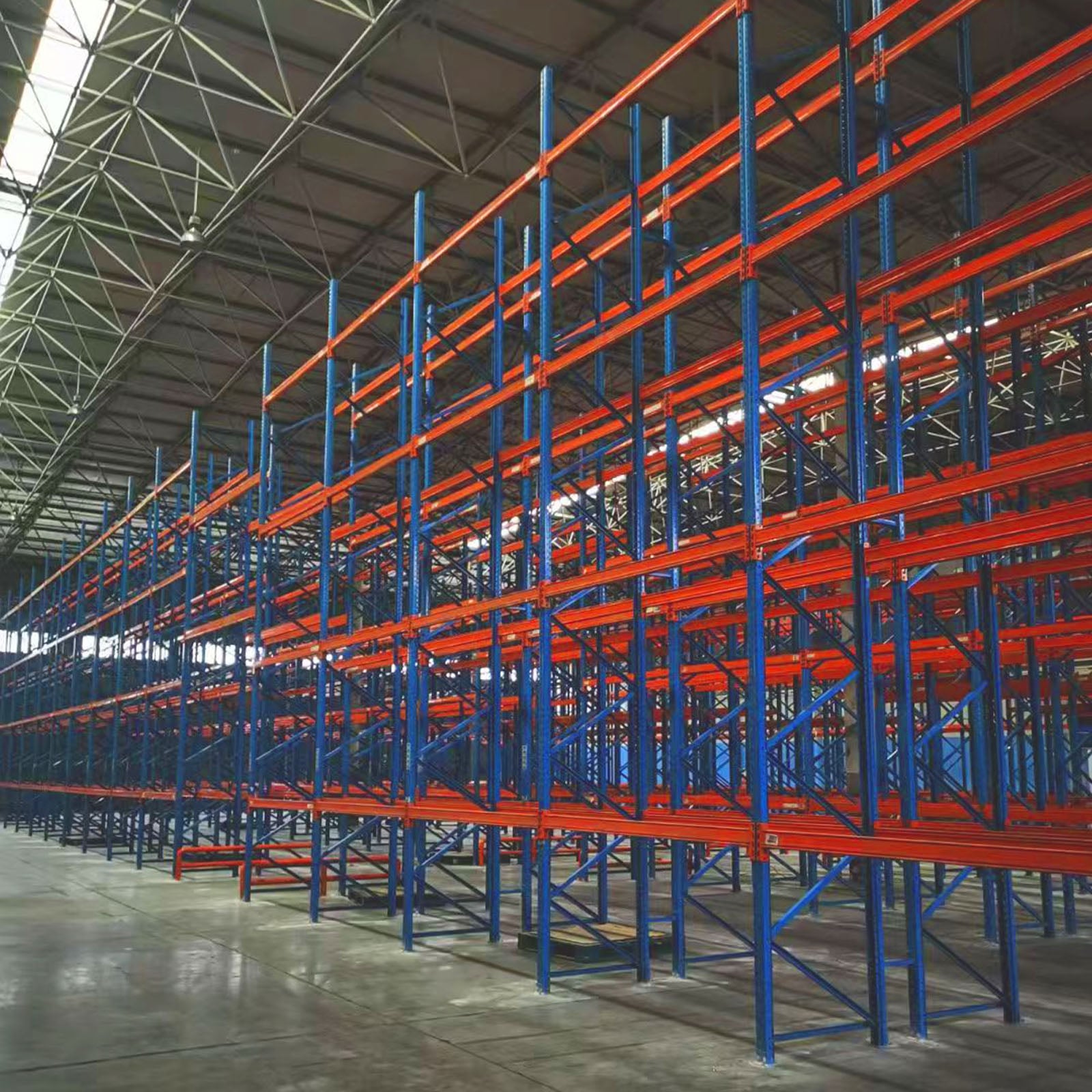
High-turnover goods (e.g., best-selling e-commerce products, urgently needed production raw materials): Priority should be given to access efficiency. Beam-type racking or narrow aisle racking is recommended. Beam-type racking supports the "First-In, First-Out (FIFO)" principle with flexible access, enabling fast turnover when used with forklifts. Narrow aisle racking has a channel width of only 1.6–2.0 meters, which improves space utilization without affecting high-frequency access.
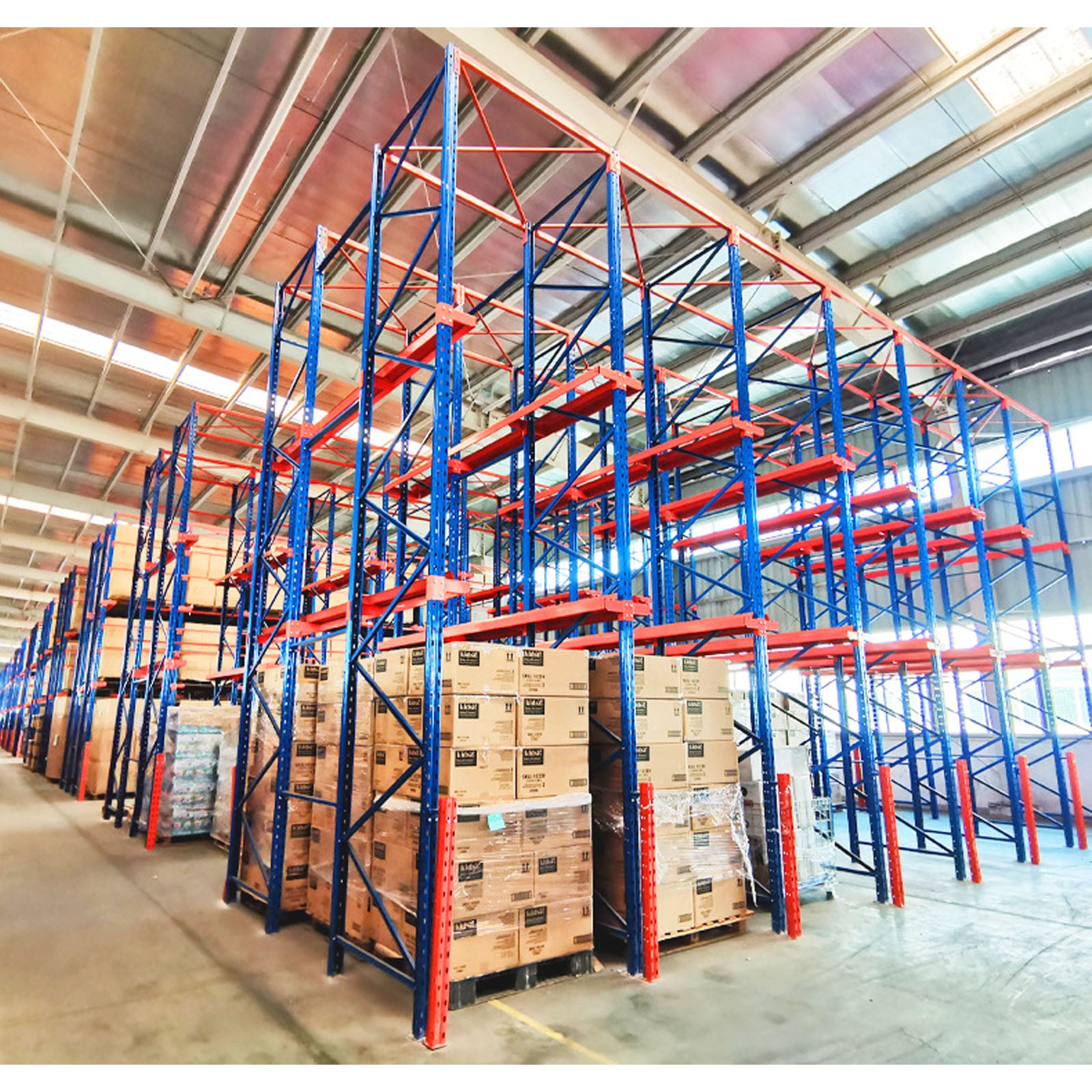
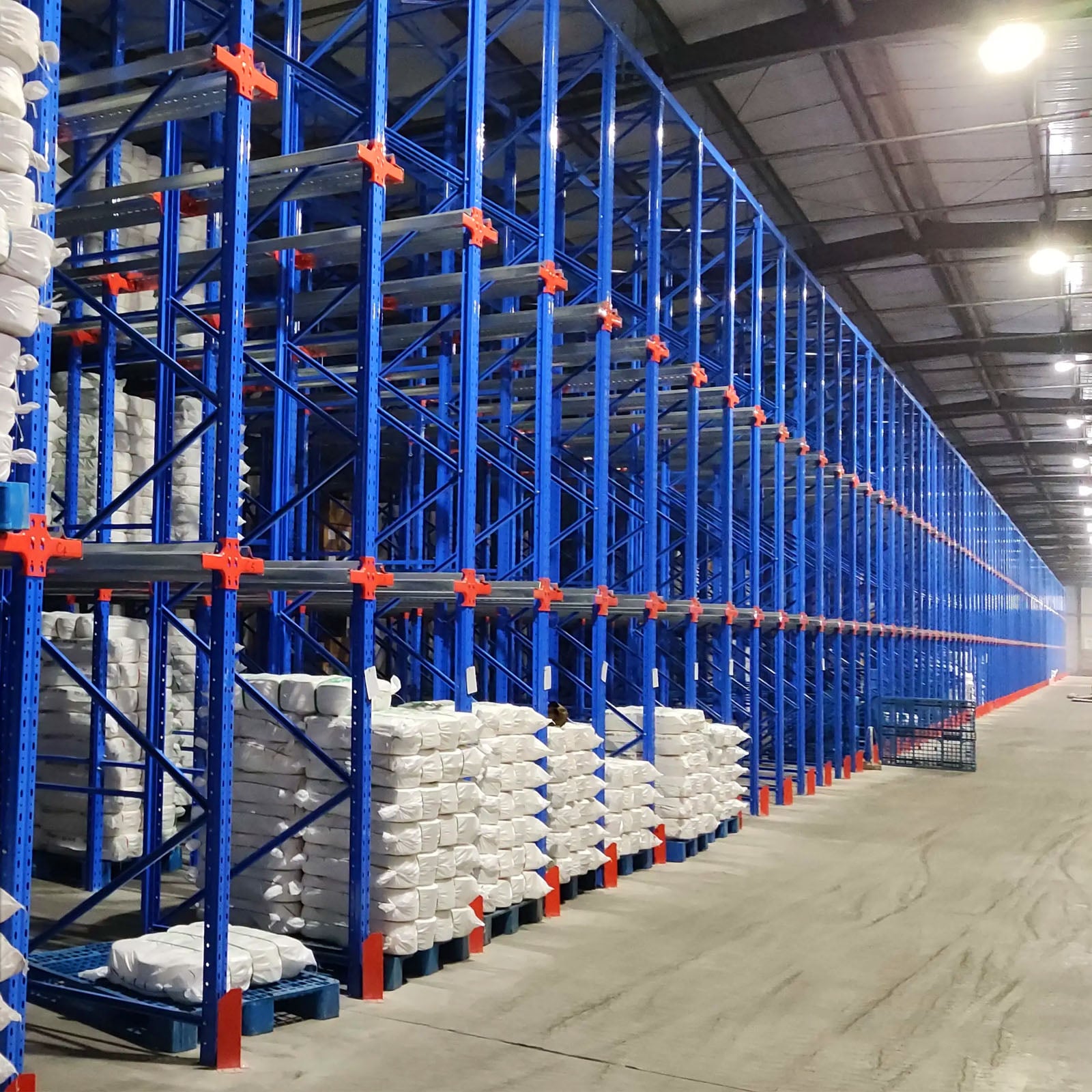
Low-turnover goods (e.g., slow-moving items, spare parts): Drive-in racking or shuttle racking is suitable. The number of channels is reduced to improve storage density. Moreover, shuttle racking can achieve automated access via shuttle cars, reducing labor costs.
A manufacturing warehouse once stored high-turnover raw materials in drive-in racking, resulting in lengthy forklift access routes and a 40% drop in operational efficiency. After switching to beam-type racking, the efficiency recovered significantly.
II. Basic Constraint: Adapting to Warehouse Conditions
The physical conditions of the warehouse directly define the boundaries of racking selection. Three core indicators need to be prioritized: floor height, floor load capacity, and space shape.
Warehouse Floor Height
Floor height determines the vertical utilization potential of racking.
Low warehouses (floor height ≤ 5m): Single-layer beam-type racking is suitable to avoid inconvenience in access caused by overly high racking.
Regular warehouses (floor height 5–8m): High-level beam-type racking (4–6m in height) can be adopted, paired with electric stackers to enhance space utilization.
High-standard warehouses (floor height ≥ 8m): Narrow aisle racking or automated storage and retrieval system (AS/RS) pallet racking is an option, with racking height reaching 10–15m, increasing space utilization by 30%–50% compared with traditional racking.
It should be noted that a safety distance of at least 50cm must be reserved between the top of the racking and the warehouse ceiling to avoid affecting fire sprinklers and ventilation.
Floor Load Capacity and Structure
Floor load capacity determines the installation method and load-bearing limit of the racking.
Warehouses with floor load capacity ≥ 3t/㎡: Rack columns can be directly fixed with expansion bolts.
Old warehouses with floor load capacity < 2t/㎡: Base plates need to be installed or mobile pallet racking selected to distribute floor pressure.
In addition, obstacles such as warehouse columns and fire hydrants must be planned in advance. Special-shaped pallet racking or modular design can be adopted to avoid space dead corners. A logistics warehouse once installed heavy-duty racking without considering floor load capacity, leading to floor settlement and racking tilting, with direct economic losses reaching 200,000 yuan.
Space Shape
Regular rectangular warehouses: Full-layer layout can be adopted to maximize space utilization.
Long and narrow warehouses: L-shaped or U-shaped layout is suitable, paired with narrow aisle racking to reduce channel waste.
Irregularly shaped warehouses (e.g., with columns and corners): Combined pallet racking can be selected, which adapts to the space shape through modular splicing.
III. Key Support: Aligning with Operational Modes and Equipment
The matching degree between operational modes and handling equipment directly affects the operational efficiency of the racking system. Two aspects need to be considered: handling equipment type and operational process.
Handling Equipment Type
The type of forklift determines the racking channel width and access mode:
Counterbalance forklifts: With a large turning radius, they need to be paired with beam-type racking, requiring a channel width ≥ 3.5m.
Reach trucks: With a small turning radius, they are compatible with narrow aisle racking, requiring a channel width of 1.6–2.0m.
AGV robots: They need to be matched with automated pallet racking (e.g., shuttle racking, AS/RS racking) to achieve unmanned access through system linkage.
If manual picking is the main operation in the warehouse, shelf-type pallet racking can be selected, with each layer equipped with shelves to facilitate the picking of small items.
Operational Process Requirements
Warehouses adopting FIFO process (e.g., food, cold chain industry): Racking supporting two-way access such as beam-type and narrow aisle racking should be selected.
Warehouses adopting LIFO process (e.g., raw material storage): Drive-in racking can be used to improve storage density.
In addition, if batch access of goods is required, shuttle racking can access multiple pallets at once via shuttle cars, which is 5 times more efficient than manual operation. If mixed storage of multiple categories of goods is needed, beam-type racking allows flexible adjustment of layer spacing to adapt to goods of different specifications.
IV. Economic Consideration: Balancing Cost and Long-Term Benefits
Selection must balance initial investment, operating costs, and long-term adaptability, avoiding the one-sided pursuit of low prices or excessive investment.
Initial Investment Cost
The unit space investment of different pallet racking systems varies significantly:
Beam-type racking: Offers the highest cost performance, with a unit investment of about 80–150 yuan/㎡.
Narrow aisle racking: Requires special forklifts, with a unit investment of about 150–250 yuan/㎡.
Shuttle racking: Includes shuttle cars and control systems, with a unit investment of about 300–500 yuan/㎡.
Enterprises should make choices based on their budget and storage needs. If goods have a fast turnover rate and large storage volume, mid-to-high-end racking should be prioritized for more significant long-term benefits.
Operational and Maintenance Costs
Heavy-duty and automated racking: Have low maintenance costs and a service life of 15–20 years, but regular inspections of beam and column deformation are required.
Light-duty racking: Features low maintenance costs but limited load-bearing capacity, with a service life of about 8–10 years.
In addition, automated racking can reduce labor costs. An e-commerce warehouse reduced labor costs by 60% after adopting shuttle racking, with a payback period of only 2 years.
Long-Term Adaptability
Enterprises with rapid business growth and changing product categories: Scalable modular pallet racking (e.g., beam-type, combined racking) is a good choice, as expansion can be achieved by adding or reducing columns and beams.
Enterprises with stable business and single product category: Integrated racking (e.g., drive-in racking) can be selected to improve space utilization.
V. Bottom-Line Guarantee: Adhering to Safety and Compliance Standards
Safety and compliance are the core bottom lines of racking selection. Three key points need to be focused on: load-bearing rating compliance, fire safety regulations, and testing certifications.
Load-Bearing Rating Compliance
The rated load capacity of the racking must be clearly marked, and overloading is strictly prohibited in actual use. It is recommended to reserve a 20% load-bearing margin. When selecting racking, check the manufacturer's test reports to ensure that the load-bearing performance of columns and beams complies with the national standard GB/T 27924-2011 National Standard for the Design of Storage Racks.
Fire Safety and Safety Design
Racking layout must reserve sufficient fire-fighting channels (width ≥ 1.8m), and the distance between racking and fire sprinklers must be ≥ 0.5m.
Anti-collision rails and base protectors should be installed at the edges of the racking to prevent forklift collisions.
Anti-falling devices (e.g., beam safety pins, shelf anti-disengagement buckles) must be equipped for high-level racking.
Manufacturer Qualification Certification
Choose manufacturers with ISO9001 quality management system certification and special equipment manufacturing licenses to avoid purchasing inferior racking. Meanwhile, request manufacturers to provide installation guidance and after-sales maintenance services to ensure the long-term safe operation of the racking.
Conclusion
Choosing the right pallet racking system is essentially a comprehensive balance of cargo characteristics, warehouse conditions, operational modes, cost-effectiveness, and safety compliance. Enterprises must abandon the misconception of "prioritizing price over adaptability". They should first accurately assess their own needs, then select racking based on the characteristics of different pallet racking systems—prioritizing beam-type or narrow aisle racking for high-turnover goods, drive-in or shuttle racking for low-turnover goods, and light-duty combined racking for enterprises with limited budgets and light-weight goods. Against the backdrop of increasingly fierce competition in the logistics industry, scientific racking selection can not only improve storage efficiency and reduce costs but also lay a solid foundation for the sustainable development of enterprises. For more precise selection, enterprises can combine their detailed cargo lists, warehouse drawings, and operational processes to seek customized solutions from professional manufacturers.

 EN
EN
 Hot News