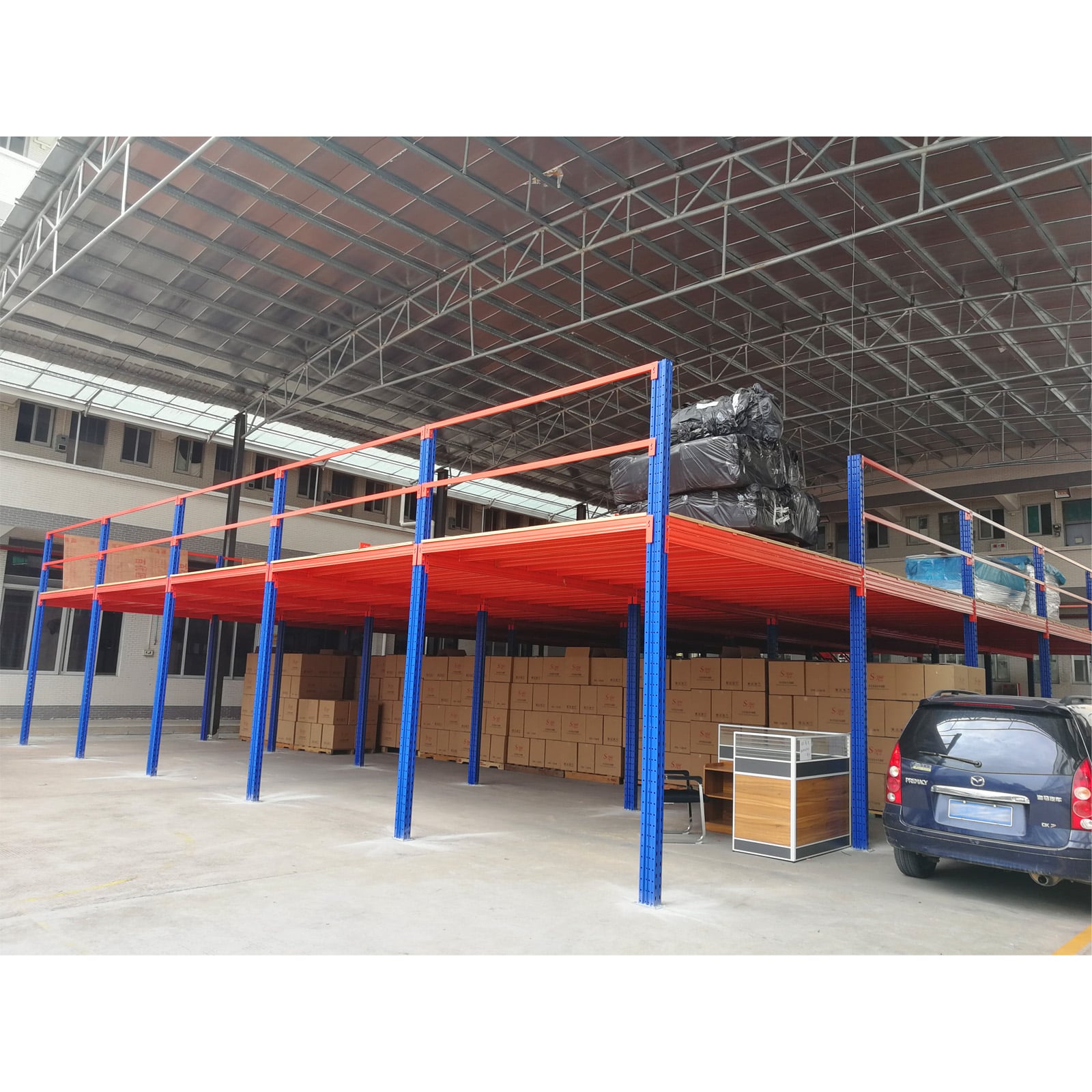
Most warehouses waste around 30 to 40 percent of their vertical space just sitting there unused, basically throwing away expensive overhead real estate. Steel mezzanine systems turn all that empty space into actual working floors that meet building codes, so companies can add storage capacity without expanding their floor area. These systems are built to handle weights over 150 pounds per square foot, making them suitable for storing heavy goods, setting up assembly areas, or even creating offices right above where regular operations happen. Compared to concrete alternatives, steel mezzanines attach directly to existing reinforced floors without needing major structural changes or any kind of foundation work at all. The modular design means everything bolts together, so installation takes just weeks instead of months, and the system can be rearranged later when business needs change. When companies maximize their ceiling height like this, they save money on moving locations, avoid paying for brand new buildings, and skip the headache of getting those complicated zoning permits sorted out.
Organizing workspaces vertically through mezzanine levels helps keep things running smoothly by dividing different parts of operations. Shipping and receiving usually stays down on the main floor, whereas storage areas, kit preparation spots, packaging zones, and even some light assembly work tend to move upstairs. When companies do this kind of separation, they typically see around a third less people bumping into each other in the aisles, plus workers walk about 20 to 30 percent shorter distances overall. Plus it keeps foot traffic away from where forklifts operate, which makes everyone safer and gets stuff done faster. Many facilities install conveyor belts or special lifts between floors to speed up how materials move from one level to another. These systems have helped cut down the time it takes to process orders by roughly 20% according to industry reports. What's great about these multi-tier setups is their adaptability too. A section that was once used for storing pallets can easily become a packing station or even office space when needed, all without shutting down operations completely. This flexibility lets businesses adjust quickly when customer needs change or during busy seasons like holidays or back-to-school periods.
Steel mezzanine systems cut down on upfront costs by around 60% compared to expanding outwards horizontally. Why? Because they eliminate the need for buying more land, building brand new foundations, and doing all that expensive site prep work which eats up so much money in regular construction projects. These systems come with pre-made parts that generate less waste and take fewer man hours to put together. Plus, when installing them, companies can use what's already there in their buildings instead of going through the hassle of getting fresh permits or fighting over zoning changes. Best part is that business keeps running as normal while these systems get installed, so no lost income and nobody has to stop working just because construction is happening nearby. All those savings mean companies can invest in better things like automated machinery, training programs for staff, or even those fancy digital tools for managing warehouses. Money saved today becomes money earned tomorrow.
Steel mezzanines can be up and running within just 2-6 weeks depending on size and complexity. These structures stand on their own and attach directly to current floor slabs without needing any digging, foundation work, or changes to load bearing walls. This means buildings stay structurally sound while putting less strain on older foundations. The parts come pre-made so installation is fast too. Workers simply bolt everything together with regular lifting gear and basic tools. Traditional building methods mess things up down below with big machines, trenches, and all sorts of dust flying around. But with mezzanines, operations keep going as normal during installation. Businesses get real working space that meets safety standards in record time without affecting how much they produce or the quality of service customers receive.
Steel mezzanines are changing how warehouses think about space. These bolt together systems let businesses grow their storage area bit by bit. A company might start with just 500 square feet added on top of existing space, then expand to over 5,000 square feet as needed without tearing anything down or shutting operations for days. The whole point is avoiding those big upfront investments in full scale expansions. According to Material Handling Institute data from last year, companies save around 30% on long term costs when they take this step by step approach rather than going all in at once. Makes sense really - why spend money now for space that might not be needed for years?
Equally vital is reconfigurability:
When seasonal demand shifts require converting storage to packing or staging, teams execute layout changes during weekend shifts—achieving 100% uptime. This agility neutralizes key expansion risks: business disruption, stranded capacity, and structural obsolescence within five years. In volatile markets, modularity isn't just convenient—it's a strategic advantage.
Integrating a steel mezzanine demands precise coordination with your facility's physical and operational constraints—but modern systems are engineered for compatibility. Structural assessments confirm that 85% of retrofits require only minor floor reinforcement (Facility Safety Review, 2023), and modular framing accommodates irregular column grids, low clearances, and existing utility runs.
Beyond load capacity, integration prioritizes workflow continuity:
All designs comply with OSHA fall protection standards and the International Building Code (IBC), including requirements for guardrails, anti-slip decking, stairway egress, and fire-rated assemblies where applicable. The result is not just added square footage—but a seamlessly embedded, code-certified extension of your operational ecosystem.

 EN
EN
 Hot News