Calculating ROI for a mezzanine floor centers on three interdependent inputs:
The standard ROI formula applies:ROI = [(Annual Savings + Throughput Value − Annual Costs) / Initial CapEx] × 100%
Accurate projections require realistic estimates of asset lifespan (typically 15–25 years), depreciation, and maintenance—factoring in both hard savings and productivity uplifts validated by industry benchmarks.
Most warehouse operations achieve full financial payback within 12–36 months, per logistics industry analyses including the Material Handling Institute’s 2023 benchmark report. This range reflects real-world variability—not theoretical best-case scenarios. Critical drivers include:
| Factor | Shorter Payback (12–18 mo) | Longer Payback (24–36 mo) |
|---|---|---|
| Utilization Rate | >80% vertical capacity used | <60% vertical capacity used |
| Operational Scale | High-volume facilities (>10k picks/day) | Low-volume operations |
| Integration Level | Pre-engineered modular systems with plug-and-play conveyor/AMR interfaces | Custom structural solutions requiring extensive re-engineering |
High-density facilities using automated material handling consistently deliver the strongest returns—often under 18 months—by maximizing throughput value and minimizing labor cost per pick.
Underestimating implementation complexity is the leading cause of inflated ROI projections. The most consequential hidden costs are:
Including a 15–20% contingency buffer for these variables yields robust, actionable forecasts. Phased installations—staged across zones or shifts—reduce operational disruption by 40–60% versus full shutdowns, preserving revenue continuity while maintaining safety and code compliance.
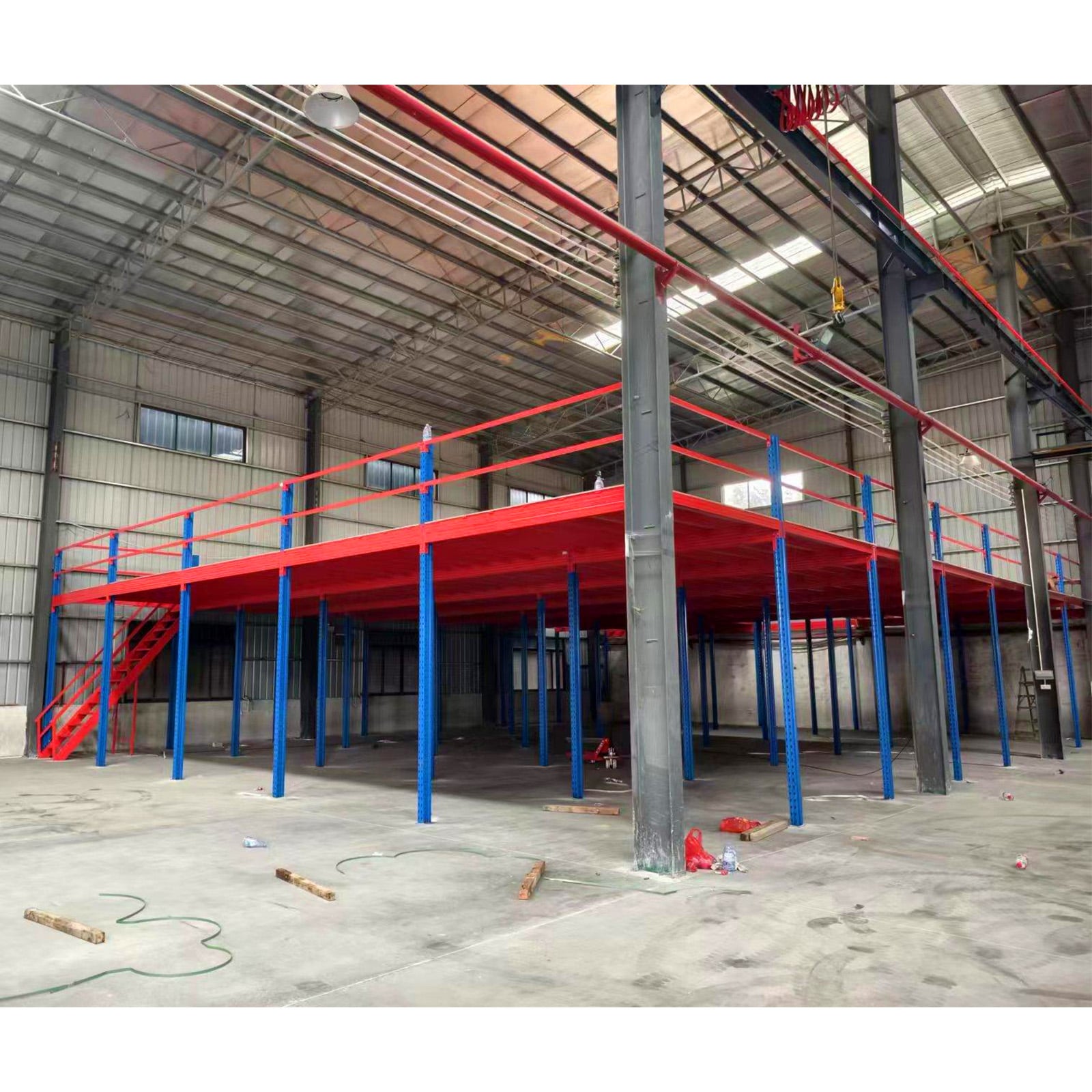
A mezzanine floor for warehouse typically costs $35–$70 per sq ft—less than one-third the price of new construction ($150+ per sq ft). This includes structural engineering for load capacities (150–1,000 lbs/sq ft), seismic compliance where required, and full integration of OSHA- and IBC-compliant safety systems: guardrails, gates, fire-rated decking, and egress staircases. Regulatory approvals—permits, third-party inspections, and adherence to ASCE 7 standards—are embedded in professional design packages.
Hidden cost risks, such as electrical rerouting or HVAC duct adjustments, can add 10–15% to budgets if not addressed early in planning. Proactive coordination with facility engineers mitigates this risk.
| Cost Factor | Mezzanine Floor | New Construction |
|---|---|---|
| Cost per sq ft (materials + labor) | $35–$70 | $150+ |
| Duration | 4–8 weeks | 6–12 months |
| Operational Disruption | Low (phased) | High (relocation) |
Total Cost of Ownership (TCO) reveals why mezzanines outperform expansion alternatives—not just on upfront spend, but on sustained operational economics. New builds or relocations incur compounding costs:
By contrast, mezzanines avoid all these costs while delivering measurable capacity gains. Industry data confirms they achieve 12–36-month paybacks because they eliminate TCO drag—not just reduce CapEx. For example, a 20,000-sq-ft warehouse adding a 10,000-sq-ft mezzanine avoids $1.5M+ in new-construction costs and $300K+ in annual lease premiums—accelerating ROI through avoided expense, not just added revenue.
A mezzanine floor for warehouse cuts unproductive movement by up to 40%, as workers navigate compact vertical zones instead of sprawling horizontal aisles. This spatial reconfiguration reduces average picking time and labor fatigue—lowering cost per pick by 15–25%, according to the Material Handling Institute’s 2023 study of 127 distribution centers. When paired with pick-to-light or voice-directed picking on elevated levels, accuracy improves alongside speed, reducing costly mispicks and rework.
Elevated platforms uniquely support bidirectional, synchronized workflows—unachievable with ground-floor expansions. Conveyors, AMRs, and vertical lifts integrate natively into mezzanine designs, enabling coordinated flow between packing (main floor) and bulk storage (mezzanine level).
| Workflow Component | Traditional Layout | Mezzanine Integration |
|---|---|---|
| Item Transfer Time | 8–12 minutes | 3–5 minutes |
| Vertical Movement | Manual lifts or forklifts | Automated lifts with PLC control |
| Cross-Zone Coordination | Disconnected processes | Unified via WMS/MES integration |
This eliminates bottlenecks in consolidation and staging. In one high-volume fulfillment center, integrating AMRs with a two-level mezzanine reduced order cycle time by 32%—without adding staff or square footage.
Warehouses routinely leave 30–50% of their vertical airspace unused—despite ceiling heights of 30+ feet. A mezzanine floor for warehouse transforms this latent capacity into functional, code-compliant space in weeks—not months—without footprint growth, land acquisition, or zoning approvals. Modern configurations increase storage density by up to 50% compared to traditional racking layouts, per NetSuite’s 2024 warehouse optimization analysis.
Key strategic advantages include:
Unlike relocation or ground-up builds, mezzanines deploy rapidly and scale incrementally—making them the highest-EEAT, lowest-risk path to near-term capacity expansion.
Payback periods for mezzanine floors generally range from 12 to 36 months, depending on utilization rate, operational scale, and the level of system integration.
The primary cost factors include structural materials, installation labor, safety systems, and regulatory compliance costs. The average cost ranges between $35 and $70 per square foot.
Mezzanine floors optimize vertical space usage, increasing storage density by up to 50% without expanding the warehouse footprint.
Hidden costs may include integration expenses, downtime losses during installation, and over-engineering. A 15–20% contingency buffer is recommended to cover these variables.
Mezzanines are significantly more cost-effective, with average costs 1/3rd that of new construction per square foot, in addition to quicker installation timelines and minimized operational disruption.

 EN
EN
 Hot News