Why Your Warehouse Performance Starts With the Right Industrial Warehouse Racking Manufacturer
Selecting an industrial warehouse racking manufacturer is not a routine procurement decision—it’s a strategic investment that shapes three non-negotiable pillars of your warehouse operations: safety, compliance, and long-term return on investment (ROI).
- Safety: Substandard materials, miscalculated load capacities, or uncertified designs from unvetted suppliers can lead to catastrophic rack collapses, endangering personnel and causing irreparable inventory damage. A 2023 Material Handling Institute (MHI) audit found that 68% of documented rack collapse incidents traced back to uncertified racking systems.
- Compliance: Non-compliant racking installations carry severe financial and operational risks. The Ponemon Institute’s 2023 report found that the average regulatory fine for non-compliant warehouse infrastructure exceeds $740,000, with the added risk of mandatory operational shutdowns that cripple supply chain continuity.
- Long-Term ROI: Inferior racking systems erode profitability through hidden, recurring costs: frequent unplanned repairs, chronic downtime, wasted storage space, and premature replacement. A certified, engineered racking solution from a trusted industrial warehouse racking manufacturer reduces total lifecycle costs by up to 40% over a 20+ year service life.
6 Actionable Tips From a Top Industrial Warehouse Racking Manufacturer to Optimize Your Warehouse Operations
These proven, client-validated tips address the most common warehouse pain points, from space constraints and compliance risks to low operational efficiency.
1. Prioritize Site-Specific, Engineering-Driven Racking Design (Avoid Generic One-Size-Fits-All Solutions)
The single biggest mistake warehouse operators make is purchasing off-the-shelf, generic racking that is not engineered for their unique facility constraints. No two warehouses are identical: floor slab load capacity, structural column placement, clear ceiling height, seismic zone requirements, and workflow patterns all demand a custom approach.
A reputable industrial warehouse racking manufacturer will never provide a one-size-fits-all solution. Instead, they deliver:
- Comprehensive on-site facility surveys to identify layout constraints, floor irregularities, and clearance limitations
- Site-specific load calculations to validate beam deflection, upright compression, and structural integrity for your exact inventory weights and material handling equipment
- Seismic zone engineering in compliance with ASCE 7-22 standards, critical for reducing collapse risk by up to 200% in earthquake-prone regions
- Full layout drawings and technical designs for your approval before production begins
2. Balance Storage Density and Accessibility Based on Your Unique SKU Profile
The defining trade-off in warehouse storage design is density vs. accessibility, and the optimal balance depends entirely on your SKU portfolio, turnover velocity, and inventory rotation requirements. A top industrial warehouse racking manufacturer will design your system around your inventory, not the other way around.
Here’s how to align your racking to your operations:
- For high-turnover, multi-SKU operations (e.g., e-commerce fulfillment, retail distribution): Selective pallet racking delivers unobstructed direct access to every pallet, supporting first-in, first-out (FIFO) inventory rotation and fast picking workflows.
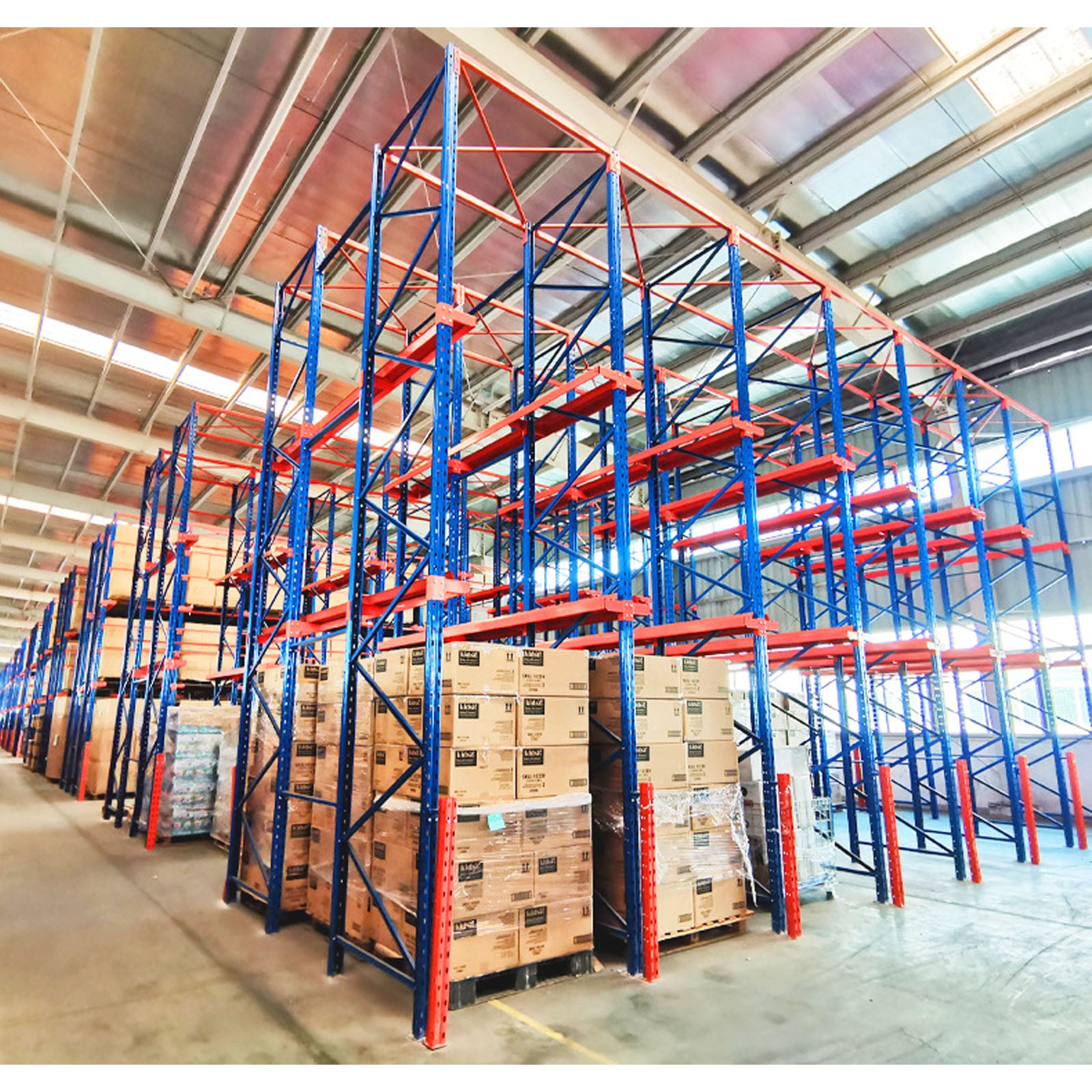
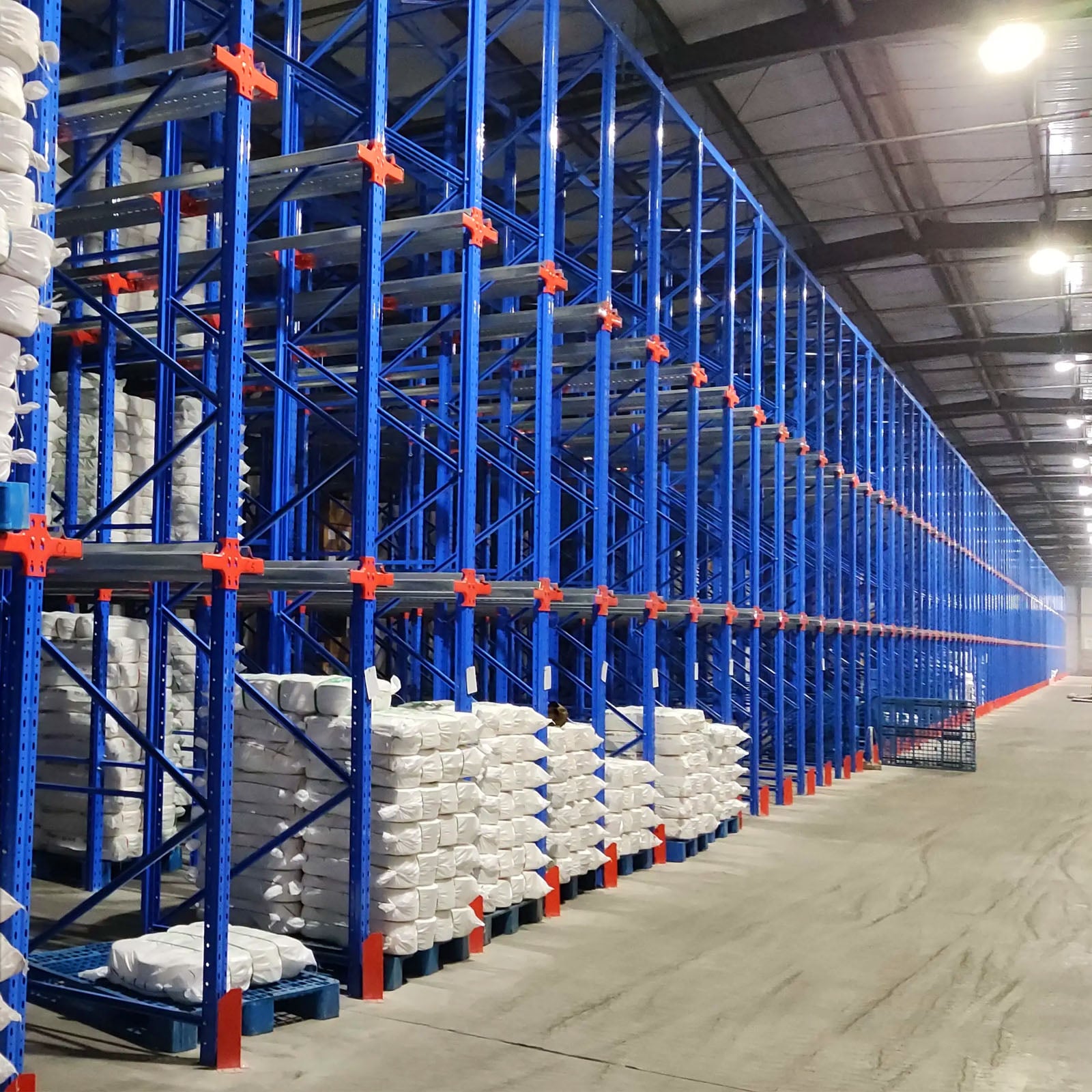
- For bulk, homogeneous, low-turnover inventory (e.g., cold storage, manufacturing raw materials): Drive-in or push-back racking delivers up to 75% higher cubic foot density than standard selective racking, using a last-in, first-out (LIFO) model to minimize aisle space.
- For perishable, time-sensitive, or regulated inventory (e.g., food & beverage, pharmaceuticals): Pallet flow racking uses gravity-fed rollers to enforce strict FIFO rotation, minimizing spoilage and ensuring full batch traceability.
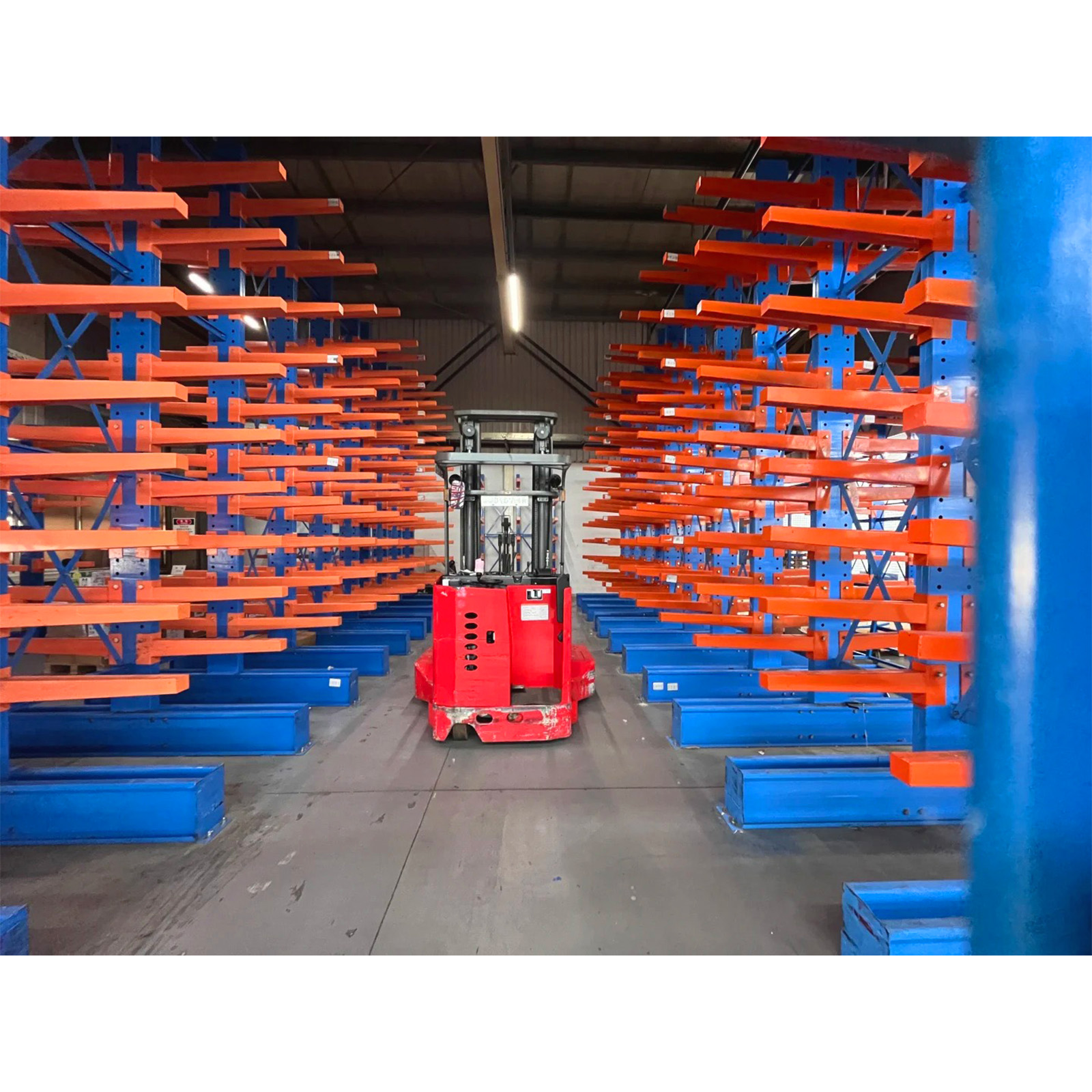
- For long, oversized, or irregularly shaped items (e.g., automotive parts, structural steel): Cantilever racking delivers unobstructed front-facing access, eliminating the bay constraints of conventional pallet racking.
3. Integrate Smart Racking Technology for Proactive Maintenance and Full Operational Visibility
Modern warehouse optimization extends far beyond steel structures. Leading industrial warehouse racking manufacturers are integrating AI and IoT technology into racking systems to create intelligent storage ecosystems that reduce risk, minimize downtime, and extend equipment lifespan.
Embedded IoT sensors deliver 24/7 real-time monitoring of critical structural and operational parameters:
- Load distribution shifts and uneven pallet placement
- Material fatigue and weld stress via vibration analysis
- Environmental stressors like humidity and temperature fluctuations
- Impact events from forklift collisions
Paired with machine learning-powered predictive analytics, this technology flags potential failures weeks in advance, enabling targeted maintenance instead of rigid, inefficient monthly checklists. A 2023 McKinsey study found that predictive maintenance reduces unplanned warehouse downtime by 30–50%, while extending racking system service life by up to 20%. These smart systems also integrate seamlessly with your existing WMS, delivering real-time inventory visibility and utilization data to streamline your end-to-end operations.
4. Ensure Full Regulatory Compliance With Industry-Certified Racking Systems
Regulatory compliance is non-negotiable for global warehouse operations, and your industrial warehouse racking manufacturer is your most critical partner in mitigating compliance risk. Uncertified racking systems not only put your personnel and inventory at risk—they also leave you exposed to massive fines, operational shutdowns, and liability claims.
Prioritize manufacturers with third-party validated certifications to global industry standards:
- FEM 10.2.02: The European benchmark for racking design integrity under dynamic and static load conditions
- RMI ANSI MH16.1: The mandatory North American standard for industrial racking structural safety, design, and testing
- ISO 9001: Validation of a consistent, robust quality management system across engineering, manufacturing, and customer support processes
A global industrial warehouse racking manufacturer will also tailor your solution to meet regional regulatory requirements, from OSHA safety standards in the U.S. to EU Green Deal sustainability mandates, ensuring your facility is audit-ready at all times.
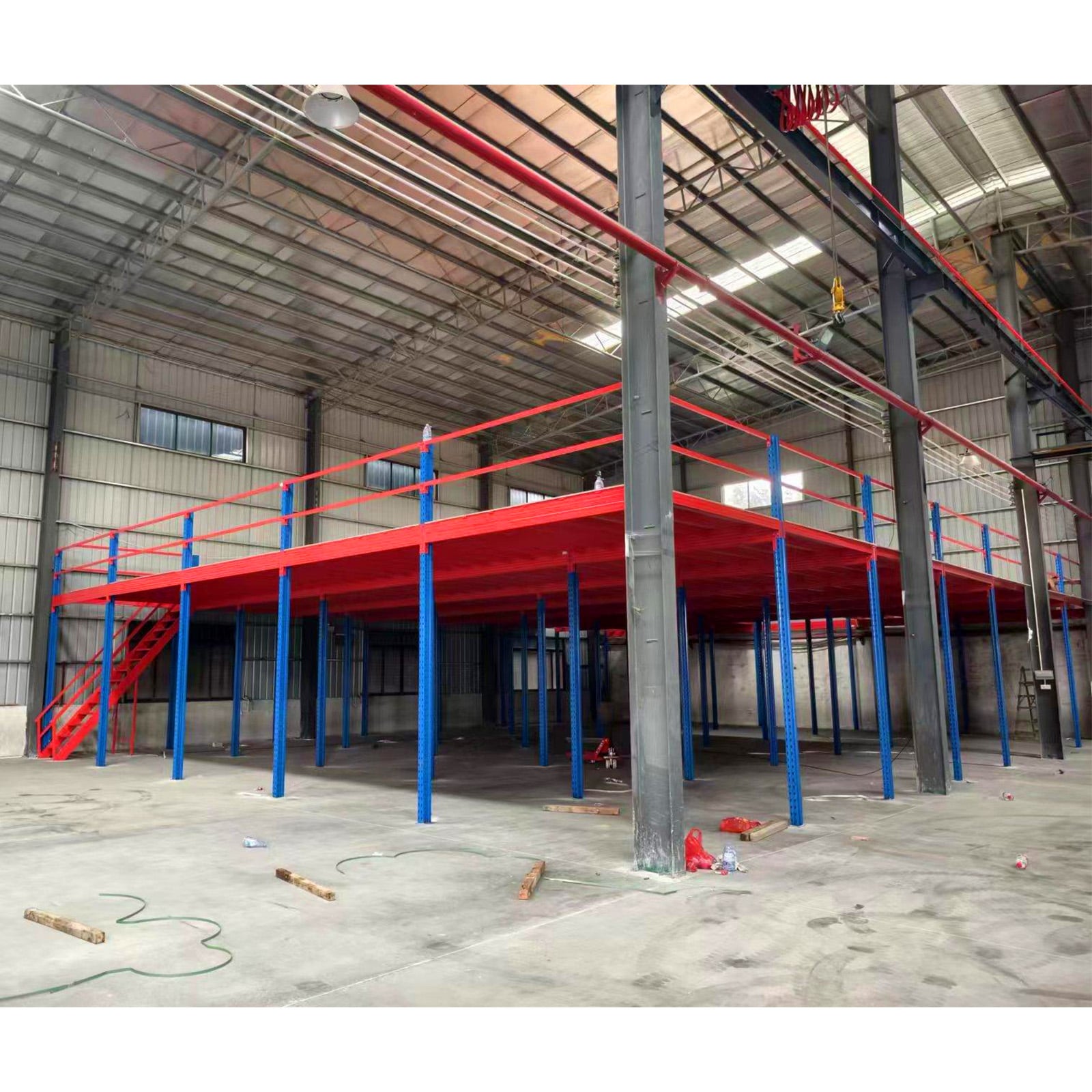
5. Maximize Vertical Space With Engineered Multi-Tier Mezzanine Racking Systems
With global industrial rental rates rising 18% year-over-year in 2023 and developable industrial land growing increasingly scarce, horizontal floor space has never been more expensive. Yet most warehouses only utilize a fraction of their available vertical space—this is where a specialized industrial warehouse racking manufacturer can deliver transformative results.
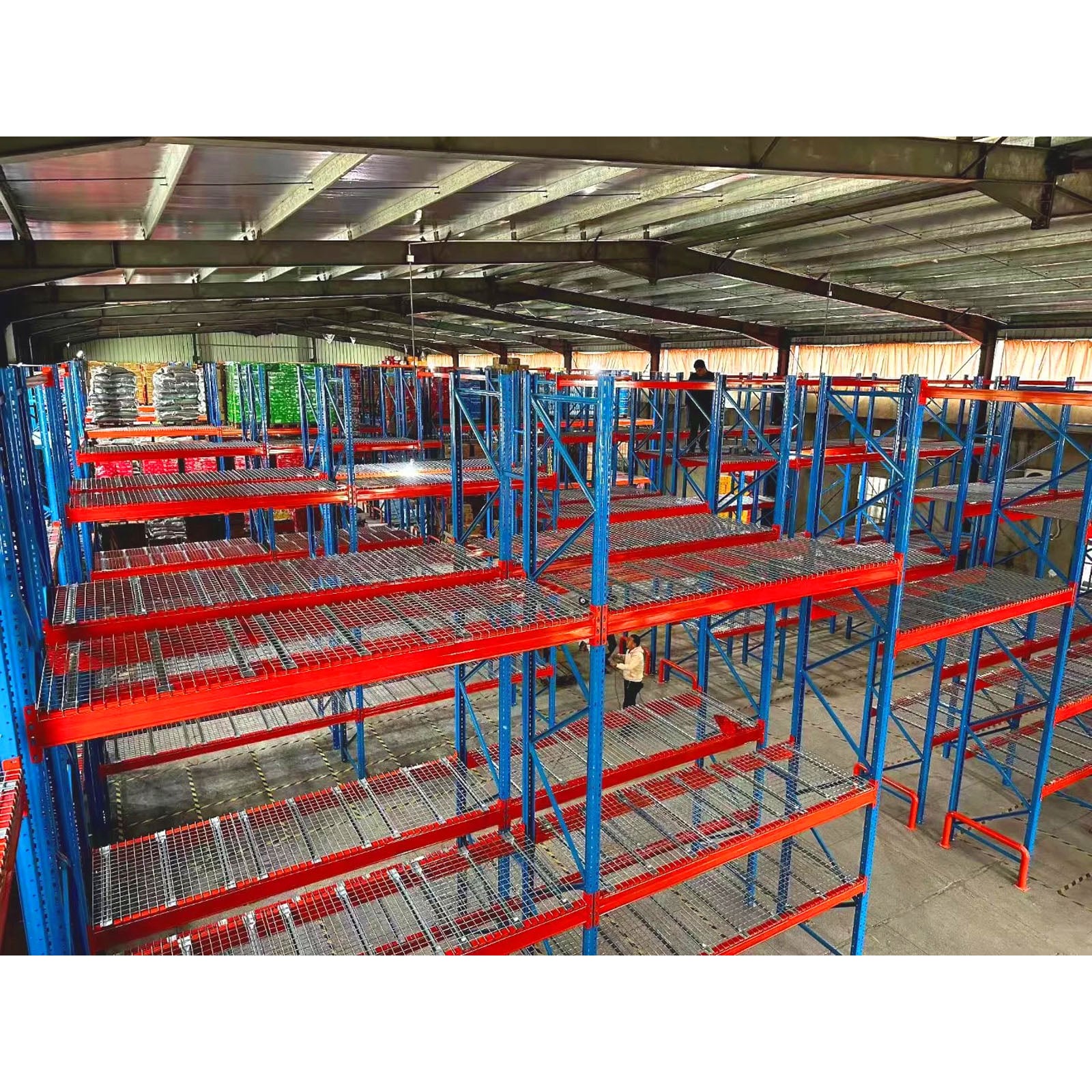
Engineered rack-supported mezzanine systems are the most cost-effective way to double your storage capacity without leasing additional square footage. These multi-tier systems:
- Minimize ground footprint by 40–60% while supporting palletized loads up to 3,000 lbs per tier
- Enable vertical clearances up to 50 feet, fully utilizing your facility’s available cube space
- Include integrated seismic protection and load monitoring to maintain full safety and compliance
- Are fully customizable to your workflow, with integrated stairwells, access points, and material handling integration
6. Partner for End-to-End Support, Not Just a One-Time Racking Purchase
Warehouse optimization is a long-term initiative, not a one-time procurement transaction. The most successful warehouse operators partner with an industrial warehouse racking manufacturer that provides full end-to-end support, not just a product delivery.
A trusted manufacturing partner will deliver:
- Pre-project: Free no-obligation warehouse layout assessments, custom design services, and detailed ROI modeling
- In-project: In-house manufacturing with strict quality control, reliable lead times (typically 15–30 days for most projects), and real-time production updates
- Post-project: Global installation guidance, technical support, ongoing maintenance recommendations, and future expansion support as your business grows
This end-to-end partnership eliminates the fragmented communication, costly delays, and unforeseen issues that come with working with multiple vendors, ensuring your project is delivered on time, on budget, and to your exact specifications.
Common Warehouse Racking Mistakes to Avoid (Advised by Expert Industrial Warehouse Racking Manufacturers)
Even the most well-intentioned warehouse optimization efforts can be derailed by these common, costly mistakes:
- Choosing the lowest bid over certified quality: Short-term savings on uncertified racking almost always lead to far higher long-term costs from repairs, fines, and premature replacement.
- Ignoring future scalability: Fixed, non-modular racking systems cannot adapt to your business growth, forcing costly full-system replacements as your inventory and operational needs evolve.
- Skipping regular structural inspections: Even the highest-quality racking system requires routine maintenance to address wear and tear, impact damage, and load shifts. A reputable industrial warehouse racking manufacturer will provide ongoing inspection guidelines to extend your system’s lifespan.
- Overlooking material handling equipment compatibility: Mismatched racking design and forklift specifications lead to inefficient workflows, safety risks, and costly retrofits. Always align your racking design with your existing or planned material handling equipment.
Sustainable Warehouse Practices: How Your Industrial Warehouse Racking Manufacturer Can Reduce Your Carbon Footprint
As global businesses prioritize ESG goals and regulatory pressure for sustainable operations grows, your industrial warehouse racking manufacturer is a key partner in reducing your warehouse’s carbon footprint.
Leading manufacturers embed sustainability into every stage of the design and manufacturing process:
- Using up to 90% recycled steel for core structural components, reducing embodied production energy by nearly 75% compared to virgin steel
- Implementing lean manufacturing processes and precision CNC machining to reduce raw material waste by up to 35%
- Adopting closed-loop water systems for coating processes and solar-powered manufacturing operations to reduce operational emissions
- Engineering modular, reusable racking systems that can be reconfigured, expanded, or recycled at the end of their service life, reducing landfill waste
These sustainable practices reduce your supply chain carbon emissions by approximately 40%, while ensuring full compliance with EPA regulations and EU Green Deal directives—all while delivering long-term cost savings for your business.
Ready to Optimize Your Warehouse Operations With Expert Racking Solutions?
Industrial warehouse racking is the foundational backbone of efficient, safe, and profitable warehouse operations—no warehouse optimization strategy can deliver on its promise without a high-quality, engineered racking system designed for your unique needs. By partnering with an experienced industrial warehouse racking manufacturer, you’ll unlock maximum storage density, uncompromising safety, full regulatory compliance, and measurable long-term ROI for your facility.
For industrial-grade, custom warehouse racking solutions tailored to your operational requirements, or to get a free, no-obligation warehouse layout assessment and custom solution design, partner with a global leader in industrial racking manufacturing. KELIDA SHELF’s 20+ years of industry experience spans in-house engineering, full-cycle manufacturing, and end-to-end project support for 1000+ completed projects across 30+ export markets. Contact us today to start optimizing your warehouse practices with expert-backed racking solutions.

 EN
EN
 Hot News