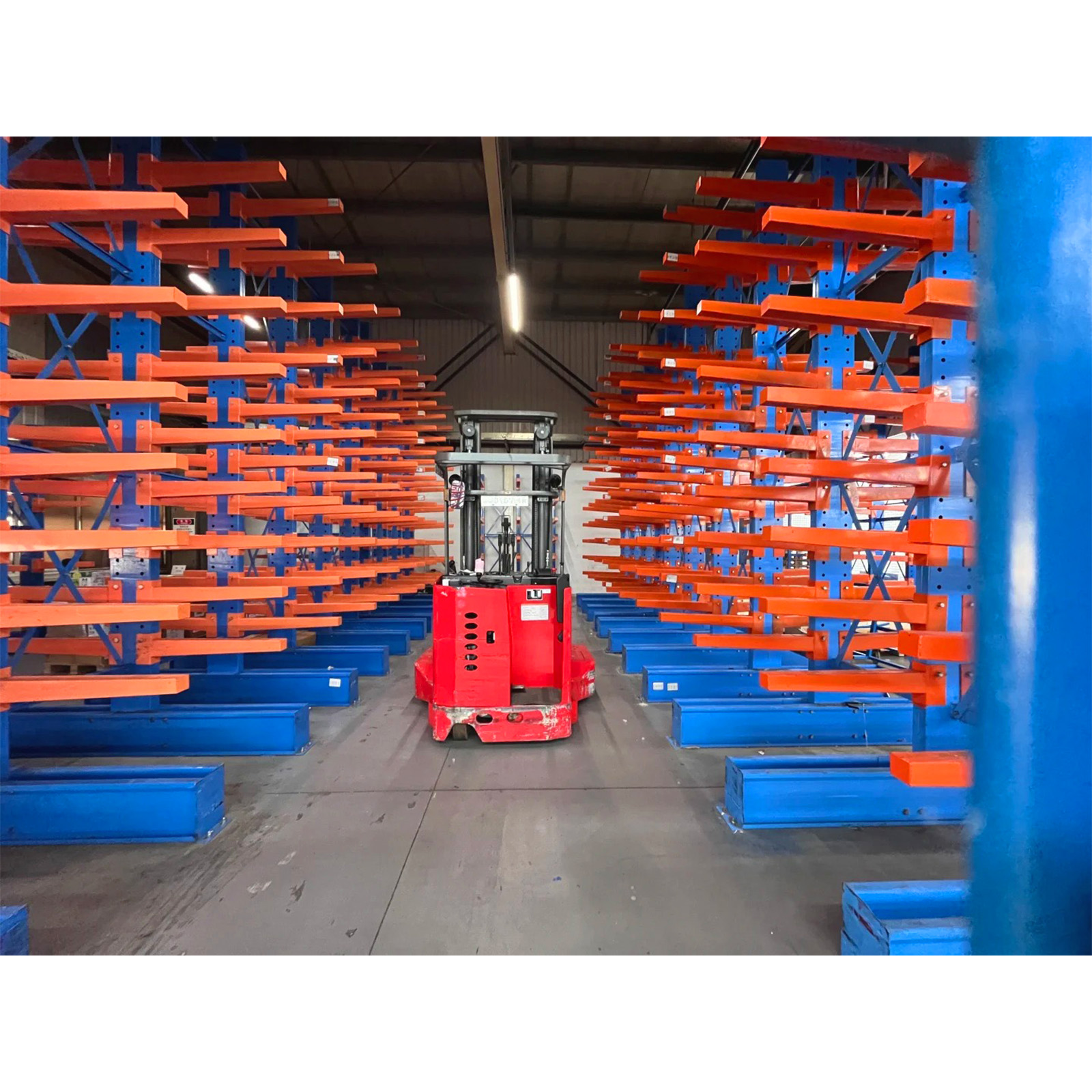
Operating as a leading entity within the industrial storage sector means constantly confronting the unpredictable nature of raw material pricing and global supply chain bottlenecks. Pallet storage rack manufacturers rely heavily on top-tier structural steel, making them directly vulnerable to sudden fluctuations in metal commodities, international tariffs, and maritime freight costs. When steel prices surge unpredictably, manufacturers face the difficult dilemma of either absorbing extra production costs or passing price hikes on to warehouse operators, which can strain client relationships. To counter these systemic pressures, forward-thinking production facilities implement advanced procurement forecasting and maintain strategic steel reserves. By doing so, they stabilize production timelines, protect profit margins, and ensure that delivery schedules for major industrial logistics projects remain entirely uninterrupted despite broader macroeconomic turbulence. Furthermore, establishing diversified supplier networks across different regions helps mitigate unexpected trade barriers and shipping delays, ensuring uninterrupted access to premium-grade raw materials.
Designing and fabricating heavy-duty industrial storage systems requires strict adherence to complex international regulatory frameworks and safety guidelines. Manufacturers must constantly navigate shifting structural engineering benchmarks established by organizations such as the Rack Manufacturers Institute, European federation standards, and rigorous quality assurance protocols. Every custom rack layout must account for dynamic live loads, seismic zone shifts, and combined dead weights without compromising structural stability. Ensuring compliance across diverse international markets demands ongoing investments in finite element analysis software, advanced computer-aided engineering testing, and third-party load certification audits. Failure to meet these stringent safety thresholds can lead to catastrophic structural failures, massive financial liabilities, and severe brand damage, making uncompromising technical compliance a continuous operational priority for industry leaders. Additionally, engineering teams must remain proactive in adapting to evolving building codes and regional municipal requirements to guarantee absolute safety and regulatory approval for every deployed storage installation worldwide.
Modern warehouse operators increasingly demand highly customized, engineered-to-order pallet racking solutions tailored to unique SKU profiles, facility dimensions, and automation integration needs. However, managing custom fabrication requests while maintaining the cost-efficiency of automated mass production presents a major manufacturing hurdle. Traditional production lines often struggle to switch between standard selective racking configurations and complex automated storage systems without experiencing costly downtime and inefficient tool recalibration. Overcoming this operational bottleneck requires integrating high-precision computer numerical control machinery, flexible roll-forming lines, and automated robotic welding stations. By bridging the gap between bespoke engineering design and high-volume manufacturing, top-tier producers can deliver tailored storage solutions quickly and economically, satisfying clients who refuse to compromise on either speed or structural specificity. This flexibility allows manufacturing partners to cater to unique warehouse footprints without sacrificing production speed or cost-effectiveness.
Like many heavy manufacturing sectors, the industrial storage fabrication industry faces a persistent shortage of skilled welding technicians, machine operators, and certified structural inspectors. Relying solely on manual labor in high-precision fabrication environments introduces risks related to human error, inconsistent weld quality, and slower throughput speeds. To resolve this challenge, progressive manufacturing facilities are aggressively modernizing their plant floors with automated punching systems, robotic welding cells, and eco-friendly powder-coating lines. This technological transition not only mitigates the impact of labor shortages but also guarantees absolute consistency across every manufactured upright and load beam. Furthermore, upskilling existing plant personnel to supervise advanced machinery fosters a safer, more productive work environment that elevates overall production quality and minimizes workplace hazards. Embracing automation ultimately transforms traditional fabrication plants into modern, highly efficient production powerhouses capable of meeting surging global demand.
Environmental responsibility has evolved from a secondary corporate initiative into a core regulatory and consumer expectation across the global supply chain. Pallet storage rack manufacturers face growing pressure to reduce their carbon footprint, minimize industrial waste, and adopt green energy practices throughout their production lifecycles. Traditional steel manufacturing and heavy chemical pretreatment processes are notoriously energy-intensive, presenting significant environmental hurdles. Leading industrial producers are actively addressing this by investing in closed-loop water recycling systems, energy-efficient induction furnaces, and zero-emission electrostatic powder-coating technologies that eliminate harmful volatile organic compounds. By championing sustainable manufacturing methods, progressive companies not only comply with tightening environmental regulations but also appeal to eco-conscious logistics operators seeking green supply chain partners. Sustainable production practices also drive long-term cost savings through reduced energy consumption and minimized material waste, benefiting both the environment and the enterprise bottom line.
Overcoming the multifaceted challenges of the modern industrial storage sector requires a rare blend of advanced engineering expertise, robust supply chain resilience, and uncompromised manufacturing capability. Kelida addresses these complex industry demands head-on by integrating state-of-the-art production technologies, including high-precision computer numerical control machinery, automated punching lines, and eco-friendly powder-coating systems. Every single rack component undergoes rigorous quality control protocols, from raw material metallurgical testing to salt-spray corrosion resistance evaluations. Supported by extensive international export experience and tailored engineering consultation, Kelida delivers engineered-to-order pallet racking solutions that combine absolute safety, economic value, and lasting durability. Partnering with Kelida empowers warehouse operators worldwide to navigate market volatility with confidence, ensuring a high-performance storage foundation that drives long-term supply chain success and operational excellence.
 EN
 Hot News