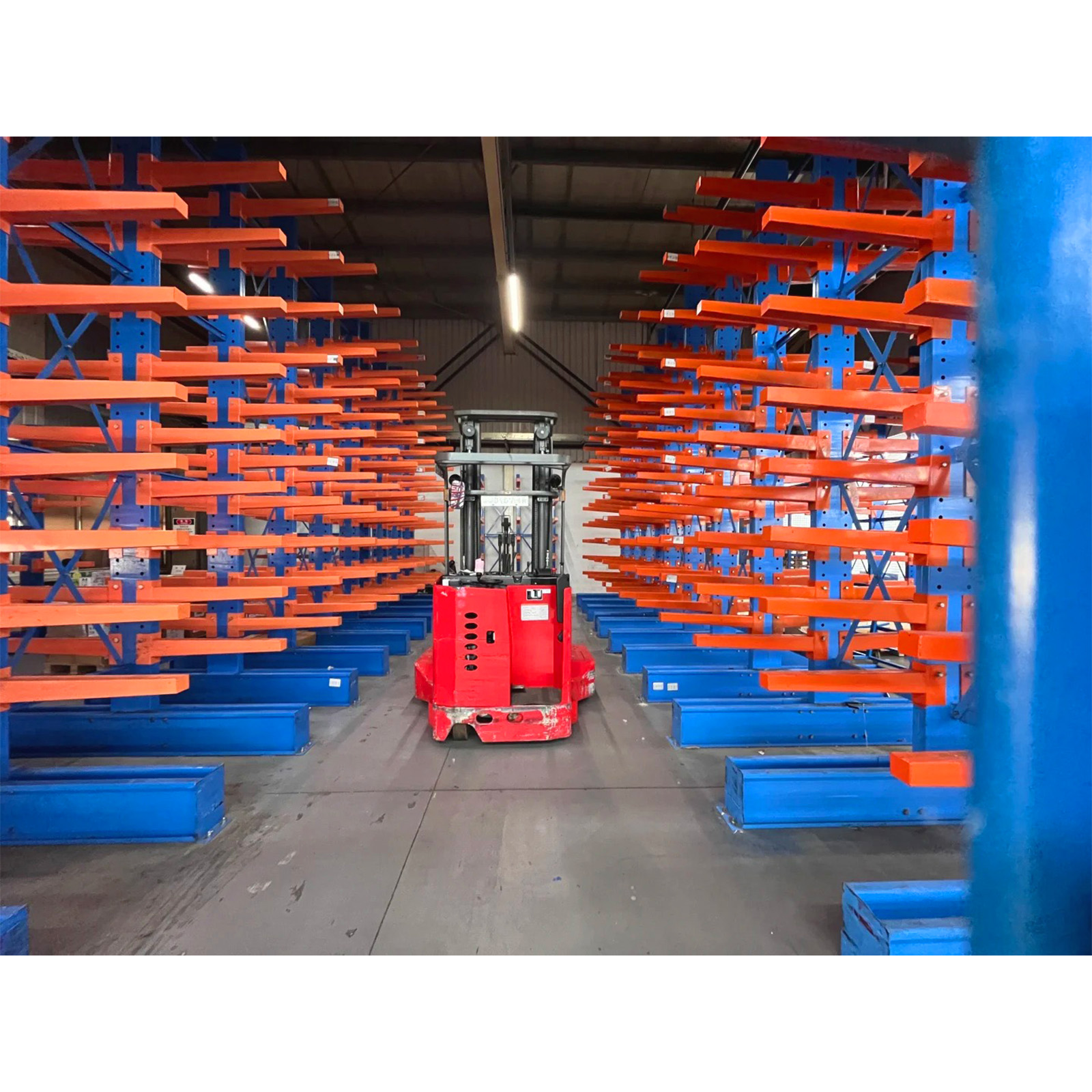
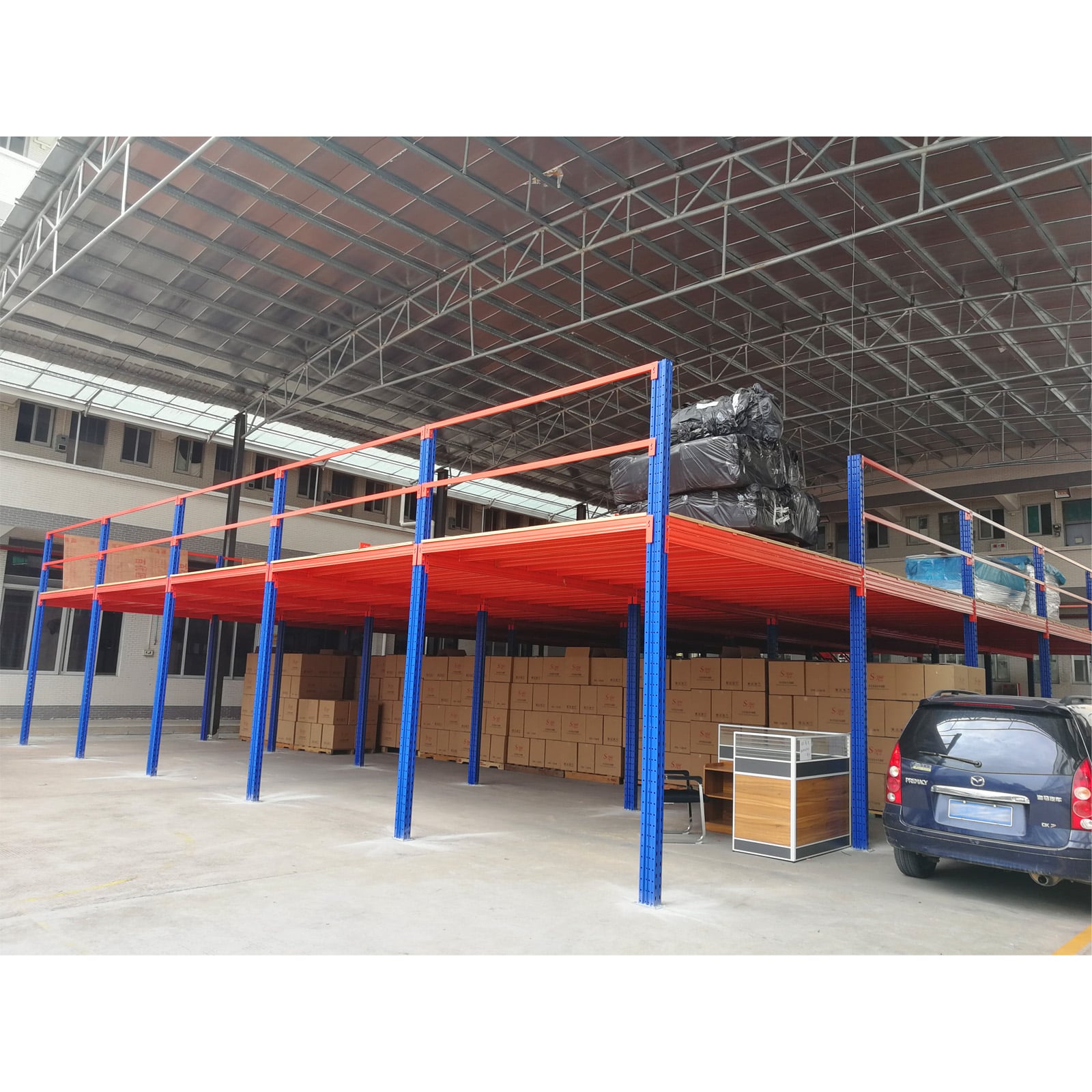
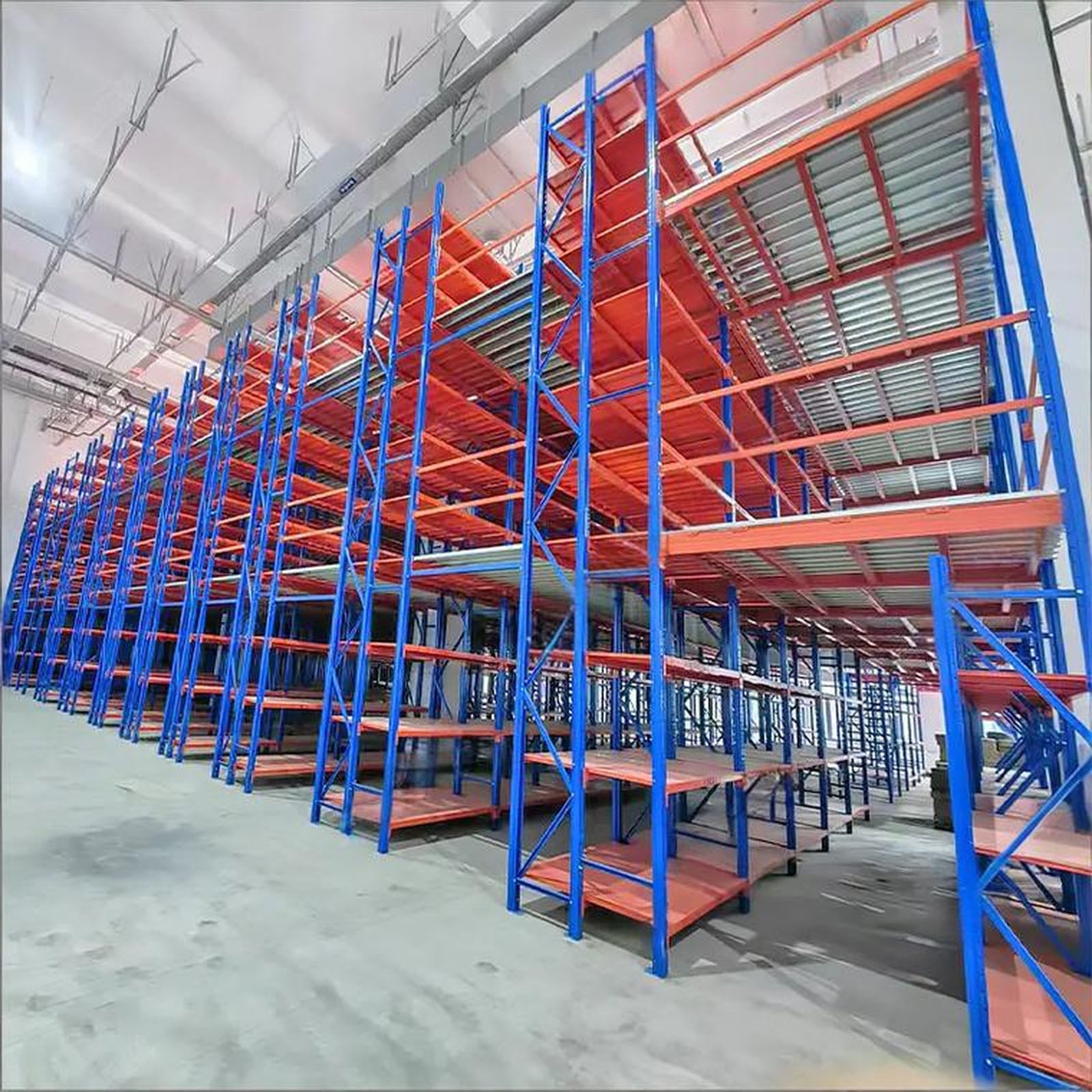
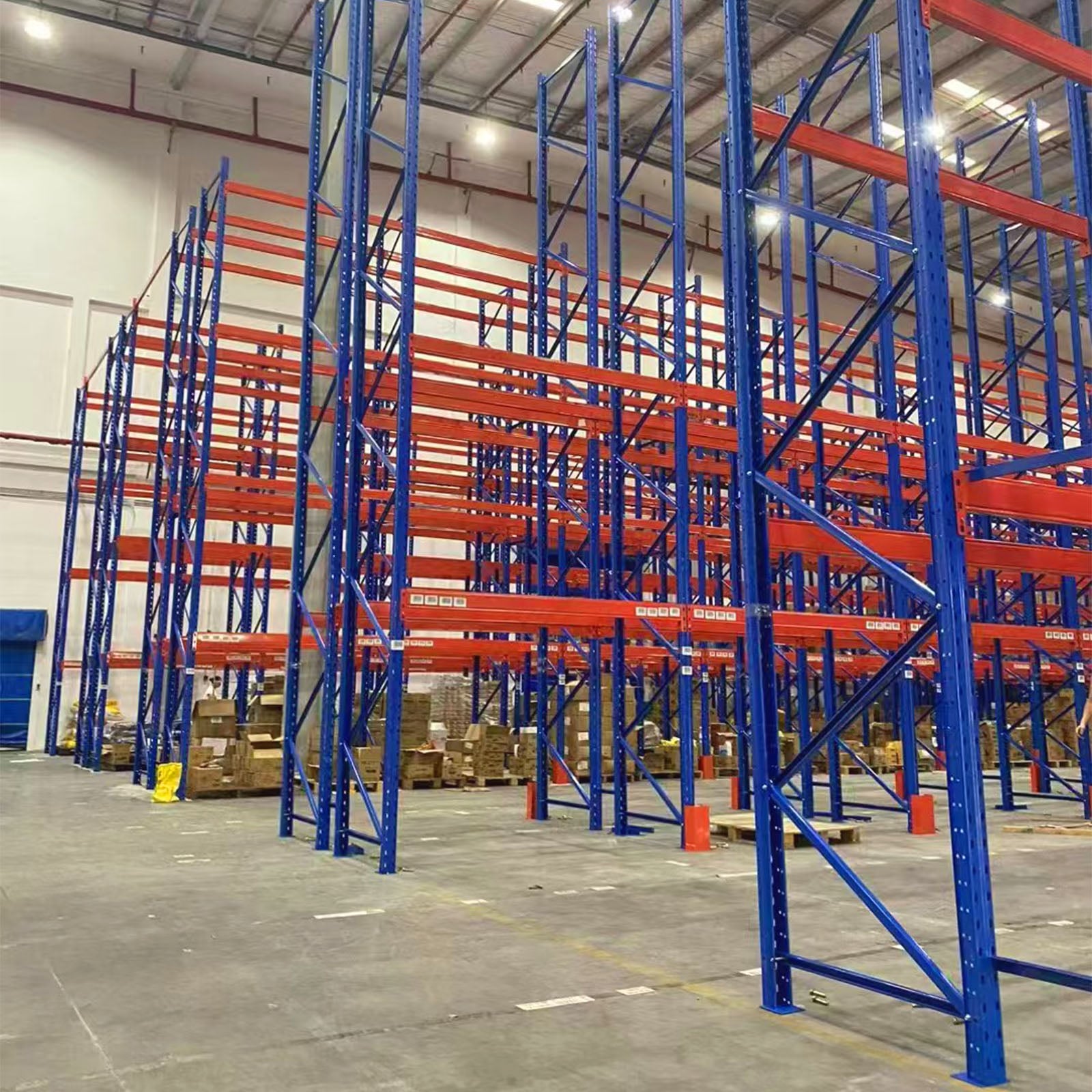
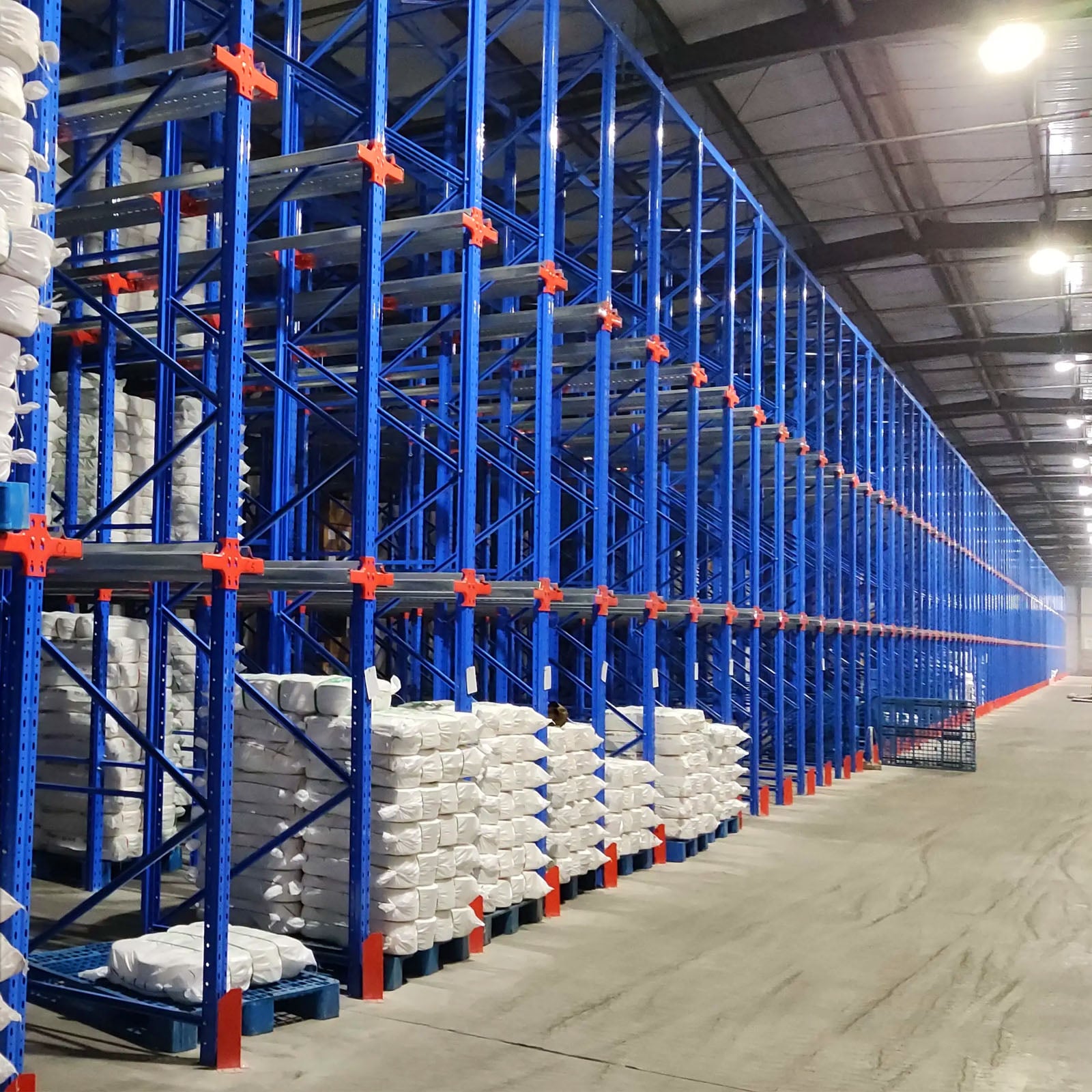
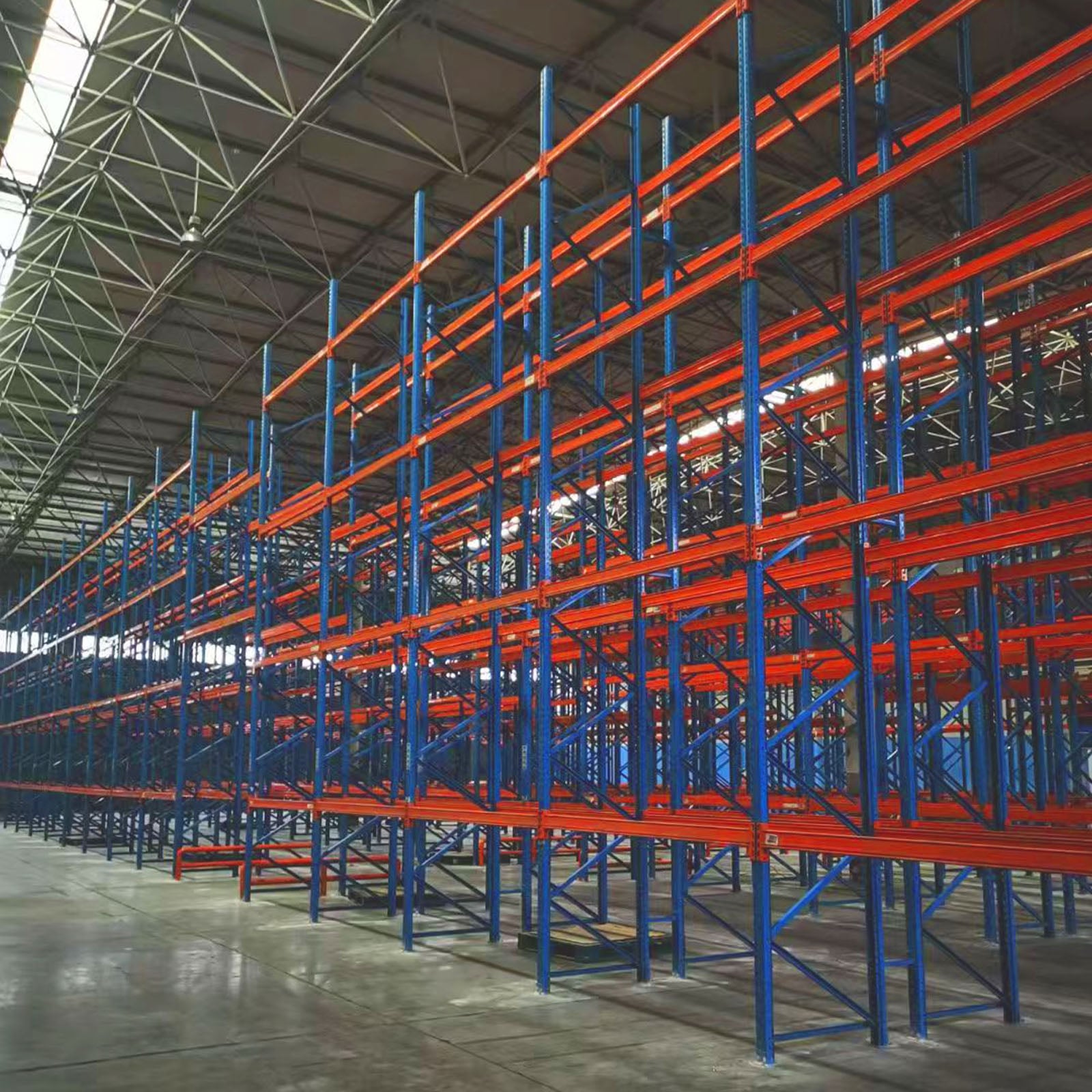
Storage racking systems in industrial settings really boost warehouse efficiency thanks to their unique structural setups. Take selective racking for instance. These systems give workers straight access to each pallet because of those dedicated aisles between them. They work best when dealing with lots of different SKUs and products that move quickly through the facility. Drive-in systems take things further by removing those middle aisles entirely. Instead, they store pallets on rails inside deep rack bays which means warehouses can fit way more stuff in the same space, although finding specific items becomes trickier. Push back racking is another option where nested carts sit on sloped rails allowing last in first out access patterns while still keeping decent storage capacity. For perishables or time sensitive materials, pallet flow racks are hard to beat. The gravity fed rollers let goods move smoothly following first in first out principles. Cantilever racks handle big or awkward shaped items with horizontal arms sticking out from vertical posts, giving full access to the front of everything stored there. And then there's double deep configuration where pallets are placed two deep in each bay. This basically doubles the depth compared to standard selective systems but requires special equipment like reach trucks to get to the second tier.
Structural integrity and space efficiency hinge on three interdependent engineering parameters:
Standard installations typically reserve 12–20% of available vertical height for safety clearances, overhead obstructions, and forklift maneuverability—ensuring compliance with OSHA and RMI standards.
How warehouse racks are set up really affects how inventory moves around—and what kinds of products work best with different setups. With selective racking, folks can get to any pallet they want because everything lines up facing the aisles. That's why it works so well for first-in-first-out operations. On the flip side, Drive-In and Push-Back systems operate on last-in-first-out principles. Newer pallets just get shoved behind the old ones, making them hard to reach without moving stuff around. This matters a lot when dealing with things that go bad over time, medications that need tracking, or items under strict regulations. Cold storage warehouses usually stick with FIFO friendly options like pallet flow systems or selective racking to keep losses down from spoiled goods. Automotive parts warehouses and places storing industrial components tend to go for LIFO systems since their inventory doesn't rot away like food products do. The equipment used makes a big difference too. Narrow aisle forklifts work great with selective racking arrangements, but Drive-In systems demand special forklifts with taller masts and different steering mechanisms to navigate those tight spaces properly.
Storage density and accessibility exist in inverse proportion across racking types. Drive-In systems achieve up to 75% higher cubic foot density than selective racking by consolidating storage into deep lanes and minimizing aisle footprint (MHI 2023).
| Racking Type | Pallet Positions | Accessibility | Inventory Flow |
|---|---|---|---|
| Selective | 100 (baseline) | Direct access | FIFO preferred |
| Drive-In | 175 (+75%) | Limited lanes | LIFO required |
Push Back racking offers something between regular selective systems and maximum density solutions. We're talking around 40 to 60 percent better space utilization compared to standard selective racking, while still maintaining last-in-first-out access across each lane. Then there are Double Deep systems which literally double the storage depth in a given space. But here's the catch they give up that instant access to every pallet level. Warehouse workers need specialized reach trucks just to grab those pallets sitting at the back of the rack. When choosing between these options, several factors come into play. How high is the ceiling? What's available in terms of floor space? How fast do SKUs turn over? For businesses dealing with lots of different products but not so many units of each item, easy access becomes more important than maximizing every square inch. On the flip side, companies storing massive quantities of similar items can afford to prioritize storage density over quick retrieval times.
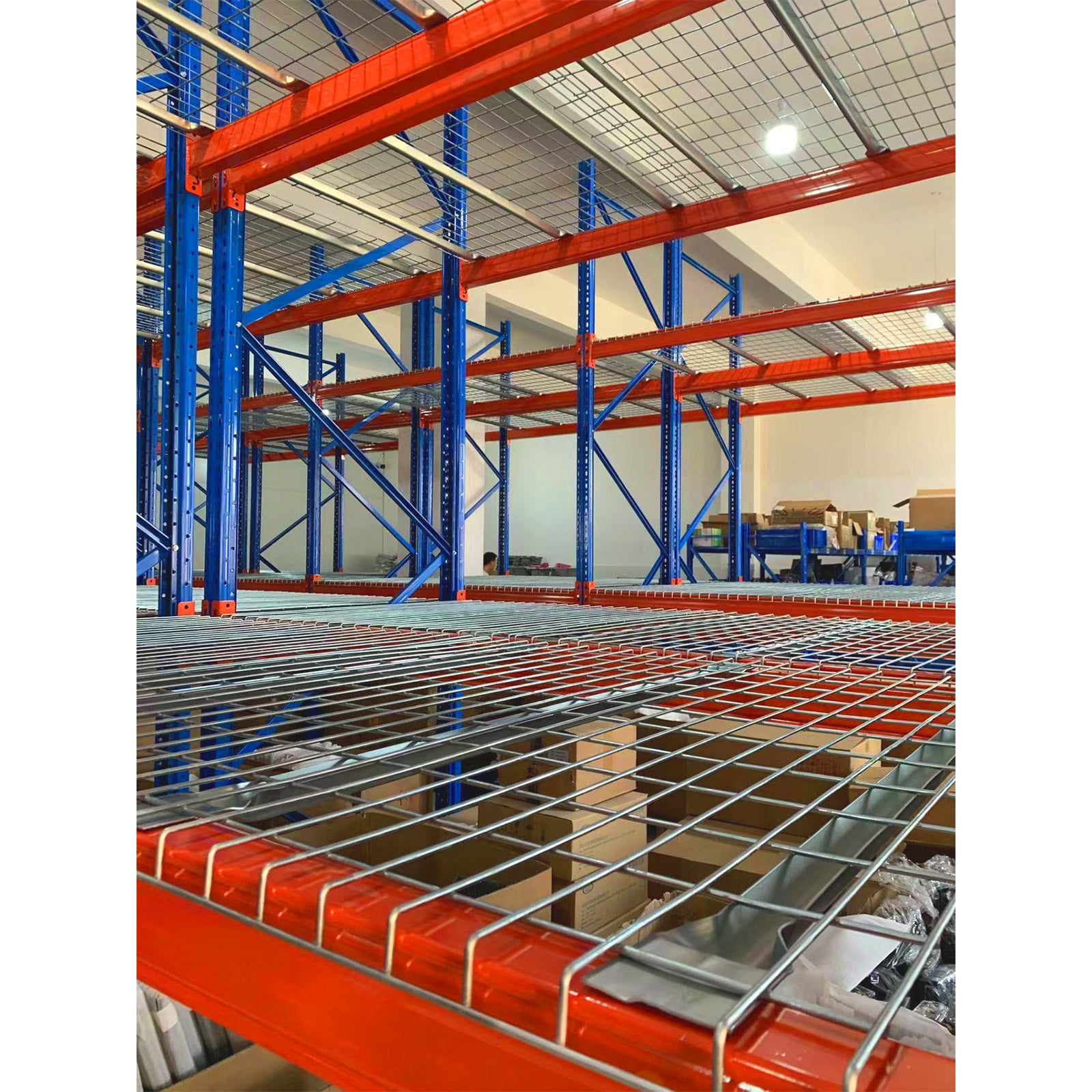
Picking the right racking system isn't just about gut feeling but needs looking at several key aspects together. Warehouse layout plays a big role here. Things like how high the ceiling goes, where columns are placed, what the floor can handle weight-wise, and getting enough space around sprinklers all determine if certain racks will work structurally. When ceilings are too low, stacking vertically becomes tricky. Irregular column placements mess with proper rack alignment and waste valuable storage space. Then there's the question of what products we're storing. Fast moving items need easy access through systems like selective racks or pallet flow setups. Slow moving stuff works better in dense storage solutions such as drive-in racks or push back systems. The number of different SKUs and their sizes matters too. Standard sized pallets fit well into regular bays, but when dealing with mixed sizes, adjustable beams and flexible upright spacing become necessary. Equipment compatibility shouldn't be overlooked either. Forklifts have to reach the same heights as the racks. Narrow aisle trucks need at least six feet of space to maneuver properly. Double deep configurations call for special reach trucks with longer masts. Getting these things wrong leads to workflow problems, potential accidents, and expensive fixes down the road. That's why taking a comprehensive look at all these factors makes sense before putting any racking system in place.
Getting racking systems right means matching what they can do with how different industries actually work, what kind of environment they're in, and what sorts of loads need storing. Cold storage facilities often go for galvanized or stainless steel racks, sometimes set up as push back or pallet flow systems. These setups let them pack things in tighter while keeping products moving first in first out, and they help cut down on heat loss since there are fewer open aisles between shelves. Car makers love cantilever racks for storing big items like car frames or exhaust systems. The adjustable arms keep everything stable and make it easy for forklifts to grab what they need without hassle. Retail warehouses dealing with stuff that sells quickly tend to mix selective racks with some pallet flow lanes. This combo helps keep track of inventory properly so nothing gets wasted, especially when we're talking about food items that spoil easily. Some studies show this approach cuts waste around 15% in certain cases. Steel companies working with beams, pipes, and coils typically install heavy duty cantilever systems that can handle over 10,000 pounds per arm. These systems not only hold the materials securely but also leave enough room at ground level for big forklifts to move around freely. No matter which business sector we look at, picking the right type of rack really matters for several reasons: keeping things cool where needed, making sure every square foot counts, ensuring structures stay strong over time, and meeting all the regulations out there. All these factors ultimately affect how much product moves through the facility each day, worker safety levels, and how much money ends up on the bottom line.
Industrial storage racking is the foundational backbone of safe, efficient, and cost-effective warehouse operations—no warehouse optimization strategy can overcome a misaligned, poorly engineered racking system. By matching your racking configuration, load capacity, and inventory flow design to your facility layout, industry vertical, and operational goals, you’ll unlock maximum storage density, minimized downtime, and full compliance with global safety and engineering standards.
For industrial-grade, OEM-compatible warehouse racking solutions tailored to your unique storage requirements, or to design a fully optimized hybrid racking system from initial engineering layouts to final on-site installation support, partner with a manufacturer rooted in decades of global industrial racking expertise. KELIDA SHELF’s 20+ years of industry experience spans custom racking engineering, in-house manufacturing, and full end-to-end project support for 1000+ completed projects across 30+ export markets. Contact us today for a no-obligation, free warehouse layout assessment and custom engineered storage solution design.

 EN
EN
 Hot News